


Non Comedogenic Oils Listing | Finest Oils for Pimples-Susceptible Pores and skin
Introduction — Oils Aren’t the Enemy, Imbalance Is
Oils themselves should not the reason for zits or clogged pores; the true situation will not be selecting the best oil for the proper pores and skin kind. All oils are occlusive to some extent, which means they kind a protecting barrier on the pores and skin to forestall moisture loss. Whereas this barrier helps hydration, it could actually additionally lure sebum, micro organism, and particles – however provided that an incompatible oil is used on acne-prone or congested pores and skin. The selection of facial oil, subsequently, turns into crucial.
TL;DR – Ayurvedic Facial Oils & Pimples
- Oils Aren’t the Enemy: Pimples and clogged pores outcome from utilizing the fallacious oil on your pores and skin kind, not from oils themselves.
- Dosha-Primarily based Choice Issues: Vata wants nourishing oils, Pitta wants cooling oils, and Kapha wants gentle oils used sparingly.
- Pimples Is an Inside-Exterior Concern: Ayurveda hyperlinks breakouts to Pitta–Kapha imbalance, Ama buildup, blood impurity, and intestine well being.
- Ayurvedic Oils Heal, Not Simply Moisturise: Right oils help barrier restore, cut back irritation, stability sebum, and nourish deeper pores and skin layers.
- Flawed Use Causes Congestion: Heavy oils, extra amount, infected pores and skin, hormonal imbalance, or ignoring inside toxins can set off zits.
The Ayurvedic Perspective on Skincare
Ayurvedic skincare is primarily centred round Dosha-based pores and skin physiology, with the three Doshas governing a person’s pores and skin construction, oil manufacturing, and sensitivity.
These with robust Vata Dosha (symbolic of Air and Earth) are likely to have dry, skinny, tight pores and skin with tremendous traces and a tough texture. Such pores and skin is well affected by chilly and dryness.
Oils really helpful for Vata: Sesame oil, olive oil
Pitta, which is symbolic of Hearth and Water, manifests in oily, delicate, acne-prone pores and skin with redness and irritation, which is sharply impacted by warmth and solar publicity.
Oils really helpful for Pitta: Coconut oil, sunflower oil
Individuals with robust Kapha, symbolic of Earth and Water, are likely to have thick, oily pores and skin with massive pores, blackheads, and dullness, notably in humid climates.
Oils really helpful for Kapha: Jojoba oil, gentle sesame oil (sparingly)
Understanding your Dosha inclinations (which can differ in response to age, local weather, and different elements) is important earlier than choosing any facial oil.
In Ayurveda, facial oils operate as Twachya – rejuvenating brokers that nourish deeper pores and skin layers. Correctly absorbed oils are recognized to enhance pores and skin barrier operate, improve mobile restore, cut back irritation, and
stability sebum manufacturing.
Clogged pores resulting in the trapping of grime and micro organism, triggering breakouts, occur solely when:
• Heavy oils are used on Kapha pores and skin, warming oils on Pitta pores and skin, or in scorching and humid climates
• Oils are over-layered or utilized in extreme amount or frequency
• Pores and skin is unclean or infected
• Inside ama (toxins) and irritation are ignored
• Hormonal imbalance is current
What causes zits in response to Ayurveda: In Ayurveda, zits is called Yuvanapidika or Tarunyapidika, arising from hormonal adjustments, eating regimen, way of life errors, and Doshic imbalance.
Key contributors:
• Pitta and Kapha aggravation
• Rakta Dhatu involvement (impurity within the blood)
• Ama (toxin) accumulation from poor digestion
• Stress, high-glycemic meals, dairy, and intestine imbalance
Ayurveda treats zits by way of inside purification, diet correction, way of life alignment, and acceptable exterior oils.
Fashionable Skincare vs Ayurvedic Pores and skin Science: An Overview
The Ayurvedic strategy to skincare: In Ayurveda’s holistic strategy, pores and skin breakouts are a results of a bunch of causes: Dosha (inherent bio-energies inside us) imbalance, improper utilization, seasonal climate fluctuations, and inside well being, not simply due to the facial oil used. In reality, from the Ayurvedic perspective, when oils are chosen accurately and utilized mindfully, they help pores and skin stability relatively than disrupt it.
In contrast to many trendy skincare approaches, Ayurvedic skincare is rooted in pure components and focuses on restoring stability by way of natural magnificence cures and Dosha alignment. It emphasises long-term skin health by way of individualised routines relatively than fast beauty fixes.
The pillars of Ayurvedic skincare are the next:
• Use of pure components and a skincare routine: Substances embody turmeric, sandalwood, neem, aloe vera, and saffron; the routine is constructed round oils, masks, and coverings aligned to Dosha inclinations.
• A holistic skincare strategy that balances Vata, Pitta, and Kapha Doshas.
• Natural magnificence cures which will take time and assist construct long-term pores and skin resilience.
The fashionable strategy to skincare is predicated on scientific analysis and innovation. It combines pure extracts with lab-formulated actives to focus on particular considerations – and shortly.
Fashionable skincare often entails:
• Use of peptides, acids, retinoids, and stabilisers.
• Concentrate on fast outcomes for zits, pigmentation, and ageing.
• Presents focused options however typically overlooks particular person structure.
Ayurvedic Classification of Facial Oils
Ayurvedic facial oils are evaluated based mostly on how they work together with the pores and skin’s deeper tissues and Doshic stability, not simply floor lubrication. This multidimensional strategy ensures oils are chosen to revive stability, not merely moisturise. 4 key therapeutic dimensions assist information personalised oil choice based mostly on pores and skin kind, season, and imbalance.
Guna (Qualities): The inherent texture, nature, and behavior of the oil on the pores and skin.
Virya (Efficiency): This suggests the heating or cooling high quality of the oil.
Karma (Motion): The particular therapeutic position the oil performs in addressing pores and skin considerations.
The principle traits of Ayurvedic facial oils are the next:
• Snigdha (Unctuous): These oils present lubrication, softness, and deep nourishment. They are perfect for dryness, roughness, and lack of elasticity. Nonetheless, extreme use can worsen Kapha, resulting in heaviness and congestion.
• Teekshna (Penetrating): These oils penetrate deep into the pores and skin’s micro-channels, serving to clear blockages, enhance circulation, and improve absorption of natural actives. They’re notably helpful for Kapha-related pores and skin considerations when used judiciously.
• Ushna (Warming): Heat oils stimulate circulation and metabolic exercise inside the pores and skin. They assist with dullness and sluggish Kapha situations, however extreme use could worsen Pitta, particularly in scorching climates or for delicate pores and skin.
• Sheeta (Cooling): These oils calm irritation, redness, burning sensations, and irritation. They’re particularly appropriate for Pitta-dominant pores and skin sorts, together with zits, rosacea, pigmentation, and sensitivity.
Facial Oil Choice: The Ayurvedic Strategy
Ayurvedic oil choice is all the time individualised and should be guided by the next parameters:
Pores and skin kind
Vata pores and skin sorts want snigdha, mildly ushna oils.
Pitta pores and skin does finest with sheeta, anti-inflammatory oils.
Kapha wants gentle, teekshna oils used sparingly
Season
Heat oils swimsuit winter; cool oils swimsuit summer season and humidity.
Present imbalance
Pimples, irritation, dryness, or sensitivity require totally different oil methods.
Ayurvedic Oils Don’t Clog Pores, Flawed Selections Do!
What Makes an Oil Comedogenic or Non-Comedogenic?
An oil’s tendency to clog pores (comedogenic high quality) relies upon totally on its fatty acid profile, absorption fee, and stability.
Fatty acid profile: Oils excessive in oleic acid or saturated fat (lauric, palmitic, stearic) are thicker and extra pore-clogging.
Gradual absorption: Heavy oils sit on the pores and skin, trapping grime and micro organism (occlusion.
Oxidation: Oils uncovered to air, warmth, or gentle are likely to degrade and clog pores extra readily.
Most facial oils include a ranking. Test the Comedogenic Scale scores beneath:
*0 – Gained’t clog pores
*1 – Very low chance
*2 – Reasonably low chance
*3 – Average chance
*4 – Pretty excessive chance
*5 – Excessive chance
Non-comedogenic oils usually have a ranking of two or beneath and are richer in linoleic acid.
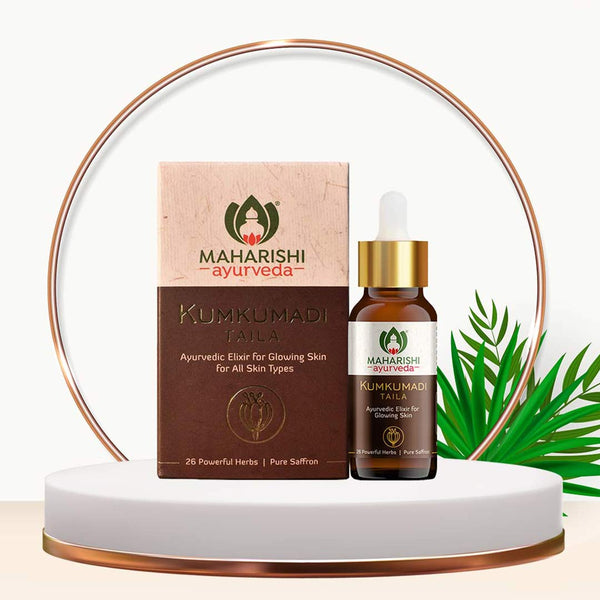
Kumkumadi Tailam: Radiant Pores and skin with Ayurvedic Glow
Extra 2% Off on Pay as you go Order
FAQs
1. What are the perfect Ayurvedic facial oils?
Kumkumadi Oil, Nalpamaradi Oil, Jojoba Oil, Grapeseed Oil, Sunflower Oil – these oils are gentle, higher absorbed, and appropriate for balanced or acne-prone pores and skin when used accurately.
2. How you can use Ayurvedic facial oils?
Do a check first: Cleanse pores and skin gently with an natural face wash and apply about 1-2 drops. If there isn’t any response in 24 hours, you could go forward and use the oil recurrently.
Proper utilization: For daytime use, apply calmly; keep away from direct solar or rinse after 1 hour. For the night time, you could apply and depart on or wash off after 30–40 minutes if pores and skin is acne-prone.
Keep away from oils if affected by lively pus-filled or cystic zits.
3. Do Ayurvedic facial oils clog pores, result in zits?
No, the oil per se doesn’t clog pores or set off zits:
– if the selection of oil is right (aligned with Dosha, pores and skin kind/situation/season)
– Utilization and utility frequency, amount is optimum
Source link
latest video

latest pick





news via inbox
Nulla turp dis cursus. Integer liberos euismod pretium faucibua



