


AI-enabled search in PLM makes for sooner, simpler knowledge discovery
PLM programs maintain data linked all through the product improvement course of. However most of them make it actually tough to search out the data you’re searching for. It’s important to chase solutions via inflexible filters over and over. Decide a component sort, a provider, perhaps a change standing, then stack some extra filters to approximate your query.
On high of that, most of them don’t perceive the hierarchies between PLM capabilities. Mother or father? Little one? Nth-level BOMs are phrases that their inside search services don’t course of. So, you get solutions which might be completely off the mark. Generally PLM merchandise offer you superfluous particulars you didn’t ask for, or they don’t offer you the belongings you have been really searching for.
After which the noise of real-world complexities makes data search much more tough. Fortunately, AI-enabled search in PLM solutions may help deal with many of those points.
On this weblog, we’ll discover how AI may help you discover solutions in huge quantities of PLM knowledge shortly and precisely.
The issues with PLM search and findability
Looking in PLM is means totally different than Googling on the web. A easy search operation in PLM is a fancy internet of computational and organizational duties. Since PLM software offers with company knowledge, they retailer tons of half numbers, paperwork, emails, and different varieties of data.
You’ll be able to simply ask your coworker to cross the information that comprise components from the Nevada provider’s top-level merchandise. However trying to find that in PLM is a frightening process since you need to undergo a maze of filters.
Furthermore, many PLM customers don’t know the place to look. In the previous couple of years, PLM distributors have labored to make knowledge retrieval simple and hassle-free. And one strategy that has gained recognition is the usage of AI search assistants.
AI simplifies navigating the information jungle
AI could make PLM search really feel much less like key phrase searching and extra like asking for what you imply. As a substitute of solely matching the precise phrases you sort, an AI mannequin can attempt to perceive your intent. What you’re really wanting for and it could additionally make sense of totally different varieties of content material that get listed.
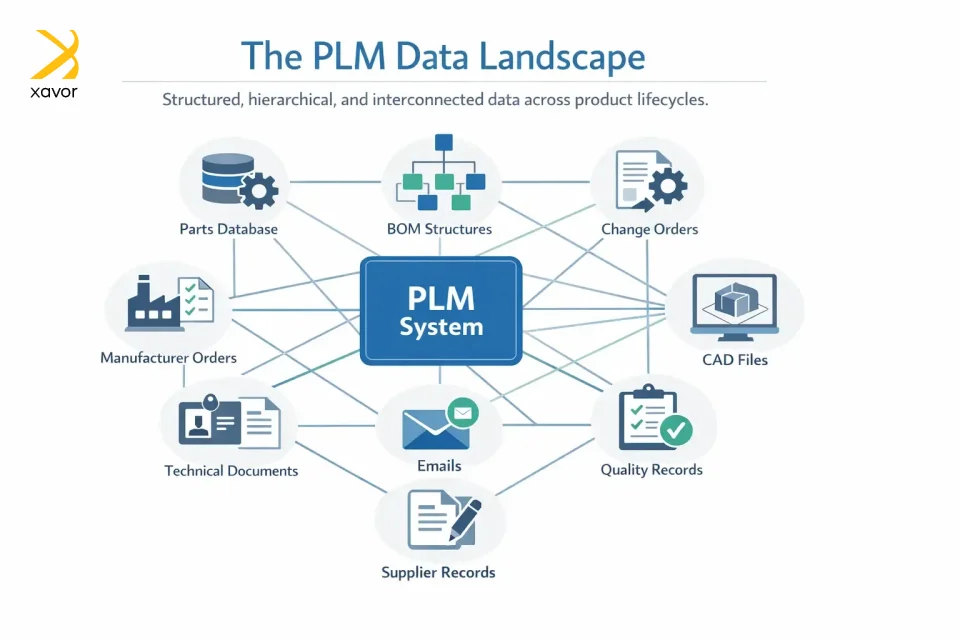
In apply, meaning you merely describe what you want in plain language. An AI layer interprets your intent into exact, structure-aware, search-engine-specific queries behind the scenes. It understands hierarchy, respects enterprise guidelines, and normalizes messy names so minor spelling/casing variations don’t block outcomes.
You’ll be able to ask for change orders, components, producer orders, and BOM-specific views in the identical fluent means. All with out studying syntax or clicking via a maze of dropdowns.
That makes search really feel extra pure, particularly for newer customers who don’t but know the corporate’s naming conventions or the suitable superior filters. And when folks can reliably discover present components, paperwork, or designs, they’re much less more likely to recreate work that already exists, decreasing duplicate effort.
Why is that this vital
As industries are changing into extra digital and extra programs join, AI is more likely to play a significant function in design workflows. Early implementations like this are mainly utilizing AI as an assistant layer between folks and complicated knowledge programs. It should assist people get the worth out of the information without having to talk the system’s actual language. Over time, that assistant function might allow tighter collaboration between people and AI, the place every does what it’s greatest at. People present objectives and judgment, and AI handles discovery, connections, and scale.
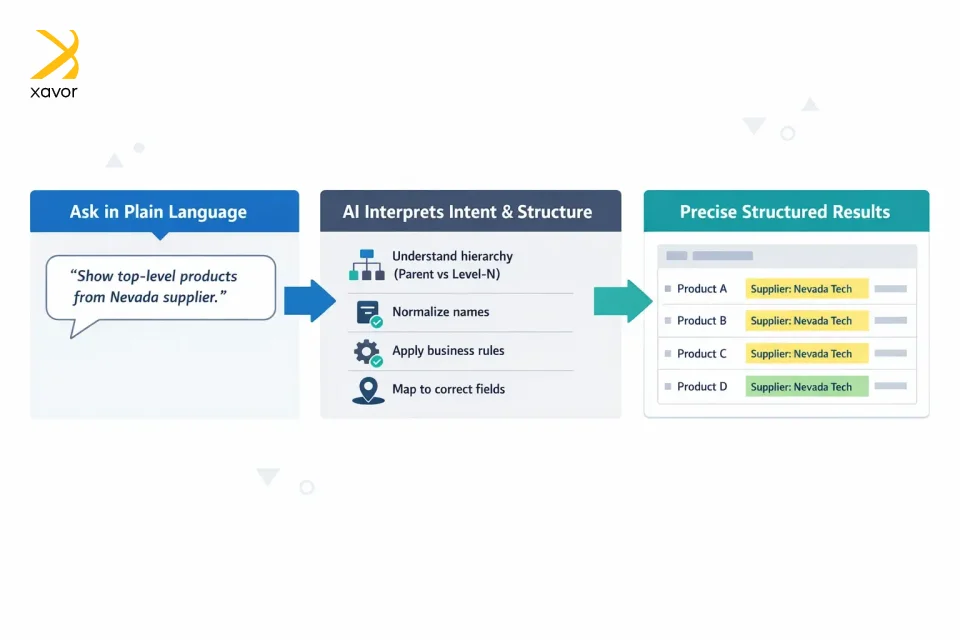
- One pure request → the suitable scope. The AI interprets place within the construction, like guardian merchandise vs. level-N part vs. any depth, and applies it instantly within the search engine retrieval logic.
- Dependable area understanding. It distinguishes equally named fields and pulls the worth from the proper layer, so standing isn’t confused with lifecycle, and the change quantity is taken from the authoritative place.
- BOM intelligence. You’ll be able to goal nth-level BOM, last-level elements, or multi-level rollups. The system returns outcomes with context, so that you instantly see why an merchandise was included.
- Stronger recall, cleaner precision. The AI expands synonyms and normalizes provider and group names whereas nonetheless protecting your constraints tight.
- Sooner refinement. Observe-ups like solely production-ready, inactive suppliers solely, or restrict to this class are understood in pure language and re-applied with out rebuilding a filter stack.
Underneath the hood, the search engine nonetheless does quick, scalable search and rating, whereas the AI provides the understanding layer that the filter UI can’t. You get constant solutions to advanced, nested questions on change orders, components, and producer orders, plus deep BOM navigation. The web result’s fewer clicks, fewer blind spots, and much more confidence that the outcomes match precisely what you requested for.
How the AI-based search movement works
The movement begins with natural-language enter. That enter is embedded and in contrast in a vector database to retrieve the top-Okay related examples, which is guarded by a similarity threshold and a fallback when matches are weak. The retrieved exemplars cross via a light-weight enhancement step that blends schema information and enterprise guidelines, similar to:
- Provides constraints
- Normalizes names
- Applies date/context hints.
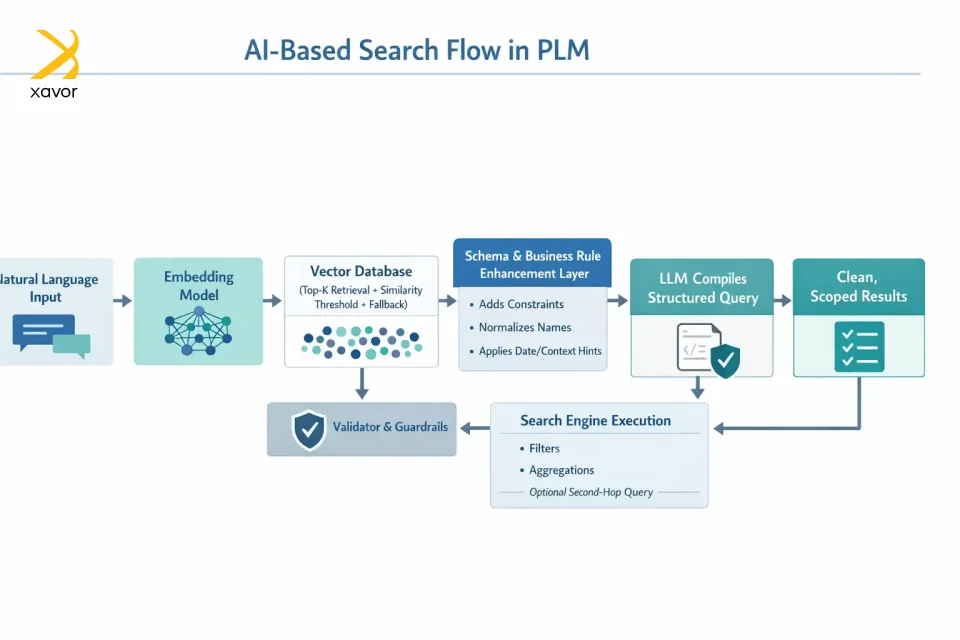
The output of this step is a concise, structured instruction that captures your intent in a means a mannequin can reliably observe. The instruction is then compiled by the LLM model right into a strict, search engine-specific question. Earlier than something runs, a validator checks syntax and guardrails. The search engine executes the question. It helps filters, aggregations, and, when a request spans a number of entities, an elective second hop. Lastly, you get clear, scoped outcomes in return.
All through, the vector retailer anchors every request to confirmed patterns for consistency, and it may be expanded over time with contemporary examples to additional enhance accuracy and stability.
Reflections on present PLM findability options
PLM programs already embody some type of enterprise search, often powered by widespread search applied sciences. However that search is usually restricted to knowledge that lives contained in the PLM world. You already know issues saved in, or instantly referenced by, the PLM database. There are just a few exceptions, however on the whole, the search doesn’t actually span the total product universe.
Information discovery instruments exist, too, however they’re usually slim in scope. And most of them goal IoT or operational knowledge, which is barely a fraction of company PLM knowledge.
Merchandise are more and more seen as end-to-end experiences, the place buyer outcomes matter as a lot as options. That forces PLM to take care of new varieties of knowledge it traditionally didn’t handle effectively. Even buyer indicators and utilization habits are actually vital. Subsequently, as product knowledge is unfold throughout many programs, PLM can’t keep remoted.
AI-based search is a sensible means ahead
Implementing AI search assistants makes product data discoverable throughout disconnected programs and silos. The aim at this stage is to make it simple to search out the suitable product knowledge wherever it lives.
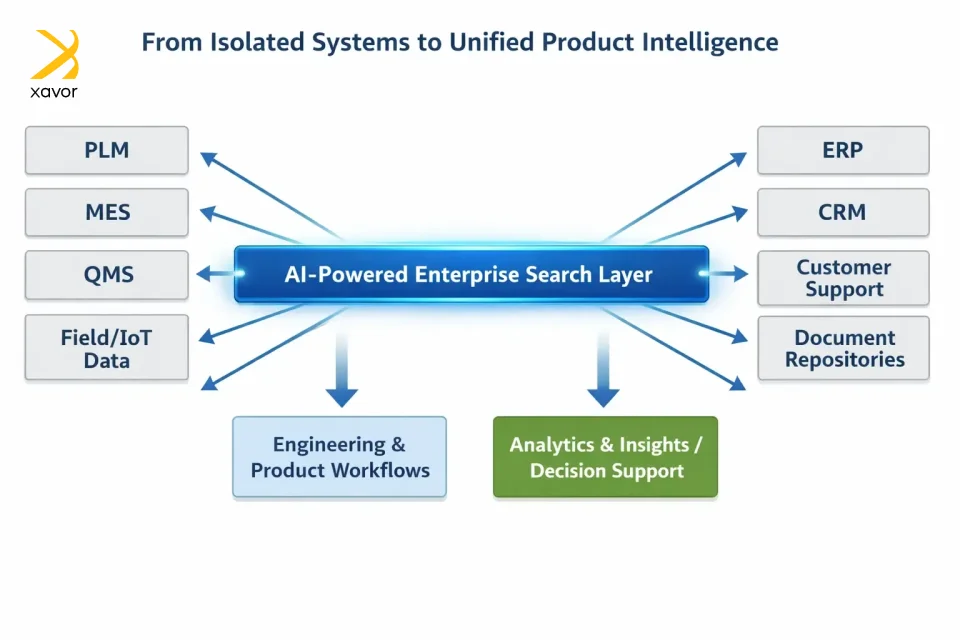
As soon as the information is findable, AI can even focus on making it dependable and linked via knowledge governance. Meaning cleansing up definitions, possession, high quality, and consistency so the group can construct true digital threads and digital twins on a reliable basis.
The core market want, proper now, is a powerful enterprise search layer that may pull product data from throughout the enterprise and feed it into two key locations.
Lastly, we are able to additionally add data discovery on high to convey efficiency and behavioral perception into the loop. To reply questions, like how clients reply, how merchandise carry out within the area, and what simulations or what-if analyses counsel.
Conclusion
PLM has actually stood the take a look at of time. Time and time once more, we heard voices that PLM is getting out of date, that will probably be changed by data-centric strategies. And a few even downgraded it as a subset of programs engineering. However PLM has solely turn out to be extra crucial and superior over the previous few years.
And the subsequent wave of digitizing is all about AI. Subsequently, PLM programs should stay on high of AI functionalities to preserve their relevance. AI-based PLM search strikes you from tedious filter-hunting to asking the precise query you care about. The system handles the hierarchy and the nuance, returning outcomes that match your intent.
Consequently, groups get sooner solutions, fewer blind spots, and much more confidence that the output is right. And so they do it with out studying question languages or wrestling with inflexible UI constraints.
Xavor has been within the PLM area for the previous 15+ years. We’ve got labored with Oracle Agile, Aras Innovator, and Propel to ship to tons of of shoppers in numerous industries. If you wish to manage your PLM workflows on trendy requirements, drop us a line at [email protected] to e-book a free session session.
In regards to the Writer

Umair Falak is the search engine marketing Lead at Xavor Company, driving natural progress via data-driven search methods and high-impact content material optimization. With hands-on expertise in technical search engine marketing and efficiency analytics, he turns search insights into measurable enterprise outcomes.
FAQs
AI in PLM is especially used to enhance search, automate classification, detect duplicate components, analyze BOMs, and floor dangers in change administration. It helps customers discover data sooner and make higher lifecycle selections utilizing giant volumes of engineering knowledge.
Sure. AI can analyze geometry, metadata, and naming patterns to establish related or duplicate components throughout the system. This reduces redundant designs, lowers materials prices, and improves standardization throughout merchandise.
AI helps join knowledge throughout PLM, ERP, MES, and IoT programs by understanding relationships and context. It makes lifecycle traceability simpler and allows insights into product efficiency, high quality points, and alter impression throughout your entire lifecycle.
Source link
latest video

latest pick



news via inbox
Nulla turp dis cursus. Integer liberos euismod pretium faucibua



