


Usha Mangeshkar: The Music, The Years, and The Legend
Usha Mangeshkar belongs to that uncommon class.
For over seven many years, her voice has travelled by Indian cinema, devotional areas, regional theatres, non-public listening rooms, and past. It has sung celebration and give up, playfulness and prayer. It has tailored, endured, and remained related with out ever looking for to dominate the body. In a household the place sound itself grew to become legacy, she realized early that presence doesn’t require quantity, and significance doesn’t require spectacle.
Born right into a family the place music was each inheritance and self-discipline, she grew up listening not solely to compositions however to silences between them. Her father, Grasp Deenanath Mangeshkar, a classical vocalist and thespian of his time, handed away when she was nonetheless a baby, abandoning unfinished compositions and an environment the place music grew to become reminiscence, accountability, and continuity. What adopted was a life formed by listening intently to mentors, to siblings, to her personal hesitations, and responding with persistence relatively than urgency.
Her profession spans Hindi, Bengali, Tamil, Assamese, and Marathi cinema, devotional music that reached tens of millions, playful widespread songs that grew to become cultural markers, and collaborations throughout languages and generations.
At ninety, Usha Mangeshkar doesn’t communicate of milestones. She speaks of moments. Of studying the right way to stand at a microphone. Of recognising when a observe wanted extra breath or much less pressure. Of selecting restraint over ambition, and intuition over comparability. Listening to her shouldn’t be an train in nostalgia. It’s an schooling in how a life is constructed when consideration stays firmly on the work relatively than the applause.
I first met Usha aunty, as I fondly name her, years in the past in circumstances that have been skilled however step by step grew to become private. I had entered her house not as a chronicler of her life, however as somebody nonetheless studying the right way to observe a life actually. What struck me was not the load of her profession, however the lightness with which she carried it. She spoke with out embellishment, with out rehearsal, with out efficiency.
Over time, our conversations deepened. They have been considerate, humorous, sometimes looking, at all times grounded. On the event of her ninetieth 12 months, I returned to these conversations with a unique intent. To not recount achievements, however to grasp how one builds a life when comparability is inevitable, recognition is uneven, and legacy exists earlier than one has even begun.
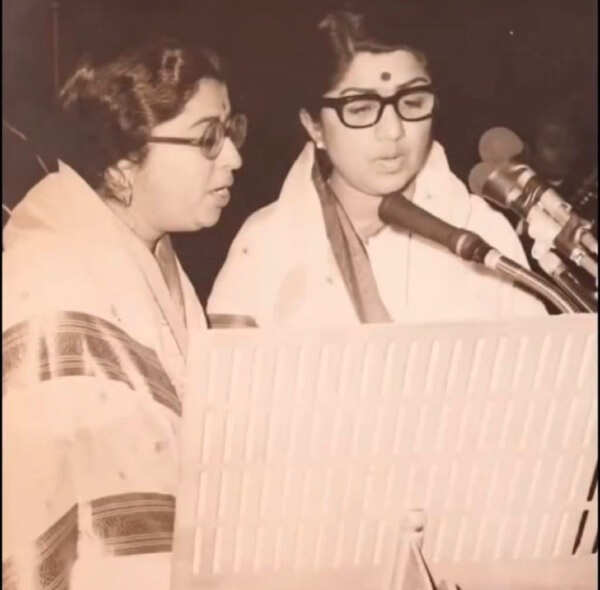
What follows shouldn’t be a list of success. It’s a file of endurance, readability, and quiet authority.
You grew up surrounded by music. Did that surroundings form you naturally, or did you must carve your individual relationship with it?
Music was a part of the air I breathed, however each relationship with artwork is private. I listened way over I sang within the early years. Sitting within the recording room and listening to Didi (Lata Mangeshkar) was a studying expertise each single time. Listening teaches you proportion, steadiness, when to step ahead and when to carry again. We realized the artwork of respiration into the microphone, when to launch a phrase and when to maintain it. Nothing was rushed. I by no means felt pushed into music. I felt I used to be being ready for it, slowly and correctly.
Was there a second once you realised that music wouldn’t simply be an inheritance, but in addition your life’s work?
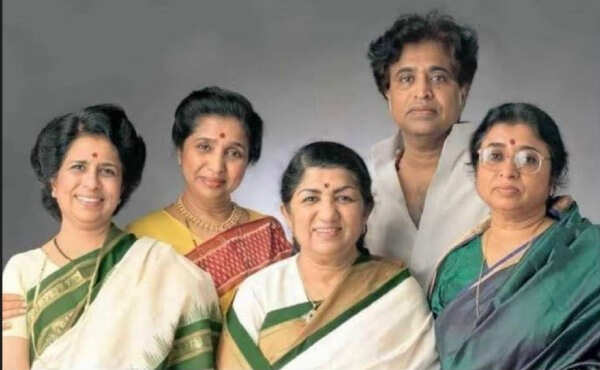
That understanding got here step by step, and I’m grateful for that. When issues come slowly, they settle deeper inside you. I by no means awakened one morning deciding to turn into a singer. Singing merely stayed with me 12 months after 12 months. My father was an incredible singer, so have been Didi, Asha Tai, Meena Tai, and Hridaynath as a composer. My environment weren’t solely inspiring, they have been additionally demanding. We have been continually studying, continually evaluating, and we have been all sincere critics of one another. That honesty formed my journey greater than encouragement ever might.
In a household of robust musical personalities, how did you perceive your individual place?
Each voice has its personal nature. I realized early that comparability is pointless when readability exists. We every had our personal particular person model of singing, and there was by no means a way of competitors amongst us. I centered on understanding my very own voice, its color, its strengths, its temperament. When you perceive that, your house turns into very clear. We have been by no means making an attempt to overhaul each other. We have been at all times serving to one another develop.

You might have at all times shared a really shut bond together with your nieces and nephews and infrequently communicate of them as your individual youngsters. What does that bond imply to you?
Sure, my sisters’ youngsters, my very own nieces and nephews, have at all times felt like my very own. This closeness didn’t begin just lately; it has been there since they have been toddlers. We shared so many moments collectively, easy joys that grew to become lasting reminiscences. I might take them to eating places, seashores, forts, picnics, even safaris. We laughed, we explored, and over time, a very particular bond shaped.
I bear in mind one little incident with Rachana, Meena Tai’s daughter. She had lengthy hair, and I took the freedom of giving her a fringe. Even now, forty years later, she retains that model. It makes me smile, but it surely additionally displays the belief and love we share. They respect me deeply, worth me, and have at all times been part of my life in ways in which transcend phrases.
Even immediately, every time I would like assist, they’re my pillars. Adinath takes care of a lot, and there are Radha, Bingo (Baijnath ), Yogi (Yogesh), Anand, and everybody of them. Their youngsters additionally proceed this circle of closeness. It’s a present, a pleasure, and a accountability I cherish each day. Their love and presence in my life have been as profound as any melody I’ve sung, regular, enduring, and deeply grounding.
Audiences typically observed similarities between your voice and Lata Mangeshkar’s. How did you view that affiliation?
Similarity shouldn’t be one thing one manufactures. It merely exists. What issues is what you do with it. I used to be at all times aware that sincerity is extra vital than distinction. If the intention is sincere, the voice naturally finds its personal id. I by no means tried to sound completely different intentionally. I attempted to sound true.
Did carrying such a well known surname ever really feel like a accountability?
Duty, sure. Burden, by no means. It jogged my memory to take care of requirements always. In a household the place work is taken severely, casualness shouldn’t be an choice. We have been taught that ethics, tradition, and devotion are the foundations of any profession. Our work was at all times seen as an providing to our mother and father, to the Almighty, and to the viewers. If you see your work that manner, you can’t deal with it frivolously.
Your repertoire strikes simply between devotional music and widespread songs. How did you keep that steadiness?
Each require the identical basis. Whether or not a tune is mild or contemplative, it calls for understanding its nuances. Devotional music asks for give up, whereas widespread music asks for timing and restraint. I loved shifting between these areas. I additionally imagine studying by no means stops. We’re all college students for all times. I saved observing modifications, traits, and new expressions. That curiosity saved my work alive.
Your devotional songs grew to become deeply embedded in folks’s lives. Did that shock you?
I by no means thought of attain. I thought of reality. Devotional music responds to sincerity, not technique. Maybe folks felt that the voice was not performing perception, however resting inside it.
You might have sung in lots of languages and musical traditions. What did that variety provide you with as an artist?
Perspective. Each language teaches humility. You hear extra fastidiously. You respect the phrase, the emotion, and the tradition it comes from. That consciousness retains an artist alert and grounded.
Your bond with Pandit Hridaynath Mangeshkar is usually spoken of with admiration. What outlined that for you?
Belief and ease. We understood one another with out rationalization. He knew I might be sincere, and I knew he valued readability over settlement. These are uncommon circumstances, and so they make inventive work deeply fulfilling.
You might have additionally expressed your self by portray. What does that medium supply that music doesn’t?
Silence. Portray slows thought down. It lets you sit with an thought with out sound. I’ve painted interpretations of Ghalib, of Meera, of feelings that don’t want phrases. Portray enhances music as a result of it asks for contemplation relatively than expression.
If you look again at your profession, what offers you the best satisfaction?
Continuity. The flexibility to work steadily, to adapt with out shedding myself, and to stay curious over many years. Longevity requires care. It doesn’t reply properly to urgency.
Did you ever really feel the necessity to chase recognition or redefine your picture?
No. I trusted the work. Recognition follows its personal rhythm. I most popular consistency over restlessness.
Many artists wrestle with self-doubt. How did you keep confidence over such a protracted journey?
Confidence comes from preparation. When you’ve got finished the work sincerely, doubt finds little or no house to remain. I believed in readiness greater than reassurance.
Your life has included each pleasure and deeply private moments. How did you keep steadiness?
By understanding that life doesn’t demand commentary at each flip. Some moments ask for expression. Others ask for stillness. Stability comes from figuring out the distinction.
At ninety, how do you see the arc of your life and work?
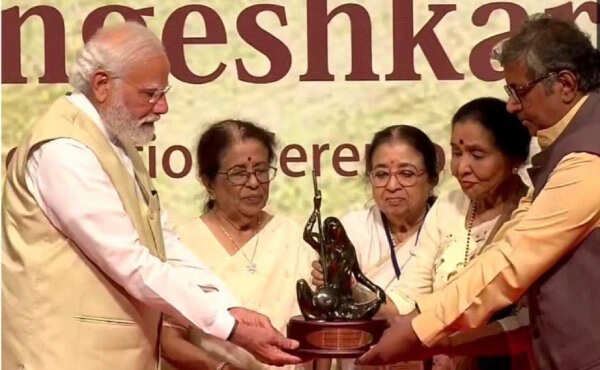
With calm and satisfaction. I did what felt true to me. I honoured my voice, my household, and my values. That feels full.
What would you say to youthful artists who admire your journey?
Listen. To your craft, to your instincts, to the folks you’re employed with. Excellence grows quietly. Let it.
Because the dialog attracts to a detailed, there isn’t any sense of finality within the room. At ninety, Usha Mangeshkar doesn’t communicate like somebody summing up a life. She speaks like somebody nonetheless inhabiting it totally. There is no such thing as a dramatic pause, no try and crystallise knowledge into slogans. And but, as she continues, one thing settles into place with unmistakable readability.
What turns into evident is that her genius was by no means performative. It lay in precision, in restraint, within the lengthy self-discipline of exhibiting up ready when nobody was watching. In an age that rewards immediacy, she selected persistence. In a world fast to measure success by visibility, she measured it by integrity. Her voice didn’t search to rise above others. It realized as a substitute the right way to arrive precisely the place it was wanted.
Listening to her, one understands that endurance shouldn’t be unintentional. It’s constructed by hundreds of small choices made accurately. The choice to hear greater than communicate. To practise earlier than performing. To stay curious relatively than defensive. To let recognition come, however by no means let it lead. Her journey reminds us that greatness shouldn’t be at all times loud. Typically, it’s exacting, constant, and quietly uncompromising.
When requested what stays important in spite of everything these years, her reply doesn’t level outward. It turns inward.
“Keep sincere together with your work,” she says, virtually gently. “In case you do this, all the things else finds its place. The second you begin performing for approval, one thing turns into fragile. However once you carry out out of understanding, it lasts.”
There’s something profoundly instructive in that calm certainty. Right here is an artist who lived alongside legends, who witnessed eras change, applied sciences shift, tastes evolve, and but by no means altered her core. Her voice tailored, however her values didn’t. She didn’t hurry to outline herself, nor did she resist change. She merely stayed attentive.
That attentiveness, sustained over seven many years, is her true genius.
For youthful artists navigating a world that calls for velocity, comparability, and fixed reinvention, her life provides a unique map. One which values preparation over publicity. Depth over show. Continuity over noise. It means that it’s potential to construct a life in artwork with out exhaustion, with out bitterness, with out erasure of self.
Because the dialog ends, there isn’t any sense of conclusion. Solely continuity. The sensation that some voices don’t belong to a second, and even to a technology. They belong to a self-discipline. To a manner of being. To the quiet confidence that comes from figuring out one has honoured the work totally.
Usha Mangeshkar’s life …..It asks to be understood. And as soon as understood, it leaves behind one thing uncommon and enduring: the reassurance {that a} life constructed with readability, humility, and unwavering dedication doesn’t fade. It settles. It stays. And it continues to show, lengthy after the tune has ended.
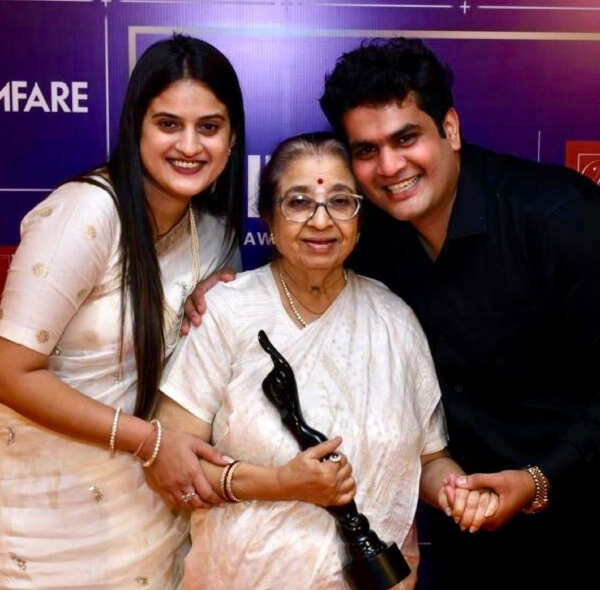
Additionally Learn: Usha Mangeshkar Recalls Winning Her First Filmfare Trophy at Filmfare Awards Marathi 2025
Source link

latest video
latest pick






news via inbox
Nulla turp dis cursus. Integer liberos euismod pretium faucibua



