


Use circumstances, advantages and future developments
There is no such thing as a business that hasn’t been touched by AI. Healthcare and life sciences are additionally at an important juncture, most likely an important one for the reason that introduction of contemporary medication. AI in healthcare can completely change one of many important services for people for the higher. AI and digital applied sciences are reshaping our therapies, diagnoses, and caregiving strategies. And this transformation is way wanted as a result of healthcare programs around the globe are presently stretched past their capability.
Healthcare will not be new to digitization. However AI solutions in healthcare carry intelligence that common automation instruments don’t carry to the desk. Think about somebody’s life is saved as a result of an clever AI agent detected an anomaly of their well being by means of knowledge earlier than any signs seem. That’s proper, purposes of AI in healthcare deal with each knowledge level, each statistic as a sign to enhance affected person outcomes that people might miss.
On this weblog, we’ll elaborate intimately how is AI utilized in healthcare, its advantages, real-world use circumstances, and key future developments in 2026. And there are all the time two sides to a coin; subsequently, we may even sort out the urgent challenges of AI in healthcare and what the way in which ahead is.
How is AI utilized in healthcare?
So, first issues first: how do they truly use AI in healthcare settings? If you’re pondering that docs simply ask ChatGPT for scientific assist, it’s not that easy, however you’re heading in the right direction. AI within the medical subject helps healthcare staff of their each day operations. It is as a lot about making the work of healthcare staff simple as it’s about enhancing affected person outcomes.
Let’s take a look at a few of the methods AI is used within the healthcare business.
1. Affected person care
When folks speak about AI in healthcare, affected person care is the place its affect turns into most tangible. It’s used to supply always-on affected person assist, personalised care, distant monitoring, and far more.
2. Analysis
AI is especially robust at diagnostic duties that rely upon sample recognition, particularly in medical imaging and alerts. These programs don’t “perceive” illness the way in which clinicians do. Nevertheless, they be taught statistical patterns from massive datasets and apply them constantly to supply accelerated analysis.
3. Drug discovery
Paracetamol was first synthesized in a laboratory in 1878, however it solely grew to become commercially obtainable underneath the commerce identify Panadol in 1955. Drug discovery is an extended, costly course of. AI in healthcare hastens this course of by analyzing and figuring out promising compounds in weeks reasonably than years.
4. Healthcare administration
One in every of AI’s largest impacts on healthcare can be the least seen. Working a big hospital is actually complicated, with hundreds of backend operations that individuals don’t see. Functions of AI in healthcare cut back administrative overhead, which straight impacts care high quality.
5. Surgical operations
That is the place AI and robotics in healthcare can considerably enhance outcomes. AI-powered surgical robots can help surgeons in performing essentially the most intricate, vital operations which may not be potential with human hand-eye coordination.
Advantages of AI in healthcare
The advantages of AI in healthcare are so profound and huge that the business merely can’t hold it out of the scene.
These are a few of the methods AI in healthcare makes the entire caregiving expertise higher for everybody.
1. Decreased clinician burnout
Working within the healthcare subject isn’t for everybody. It’s a high-stress area with lengthy shifts and fixed strain. Medical doctors, nurses, and paramedical workers are all the time on their toes. Furthermore, research constantly present that clinicians spend roughly a quarter to a 3rd of their time on documentation and non-clinical duties.
Mixed with patient-facing duties, this workload is mentally and bodily taxing for them, which can burn out many healthcare professionals.
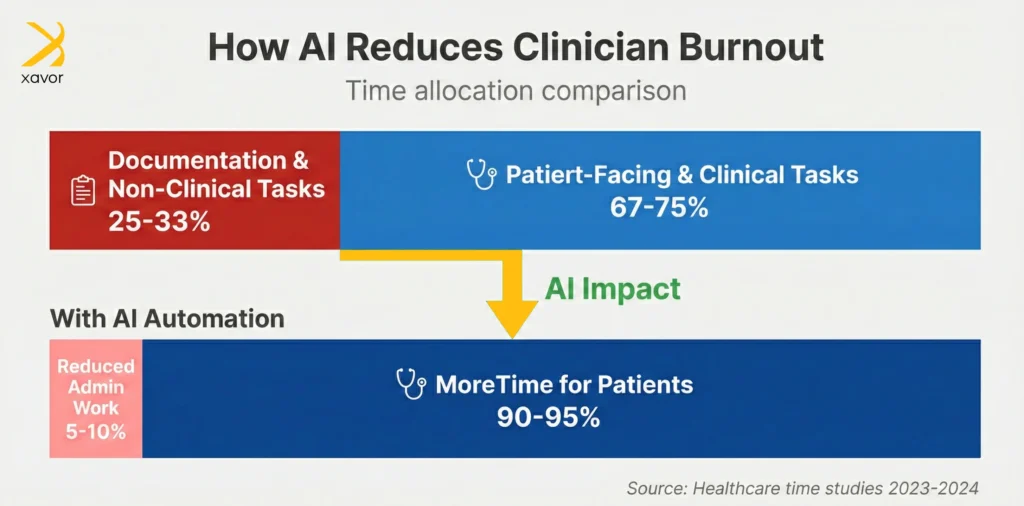
AI in healthcare helps take a lot of this burden off their shoulders. Functions of AI in healthcare do that by:
- Automating scientific notes
- Summarizing affected person histories
- Helping with monitoring and billing
Burnout contributes to medical errors, workers shortages, and rising prices. AI helps cut back this cognitive overload, which straight improves care high quality.
2. Decrease operational prices
You could have folks in the US driving all the way in which to Canada as a result of they’ll’t afford primary healthcare services again at dwelling. Nevertheless, it isn’t simply due to costly therapy; reasonably, there may be numerous inefficiency in conventional healthcare programs.
For instance, in 2023, a affected person in Massachusetts needed to pay $1,677.51 after having a routine mammogram and sonogram. She was quoted $359 initially, which she paid. However the hospital struck her with a jaw-dropping invoice weeks later as a result of the estimate wasn’t binding because of the “complexity of healthcare billing.”
AI options in healthcare are designed to take away even small inefficiencies earlier than they accumulate to trigger sufferers any discomfort, like within the case of a crushing medical invoice. Hospitals can accomplice with AI providers in healthcare to enhance:
- Scheduling optimization
- Affected person movement administration
- Claims processing and fraud detection
- Provide chain forecasting
Functions of AI in healthcare can save thousands and thousands of {dollars} yearly which can be sapped by operational inefficiencies. It should make healthcare reasonably priced for everybody and never simply a privileged a part of society.
3. Healthcare availability at scale
There’s a persistent staffing disaster within the world healthcare system. The World Health Organization (WHO) recommends one doctor per 1,000 folks. However in growing international locations, that ratio is skewed with figures like 1:1300 and even worse.
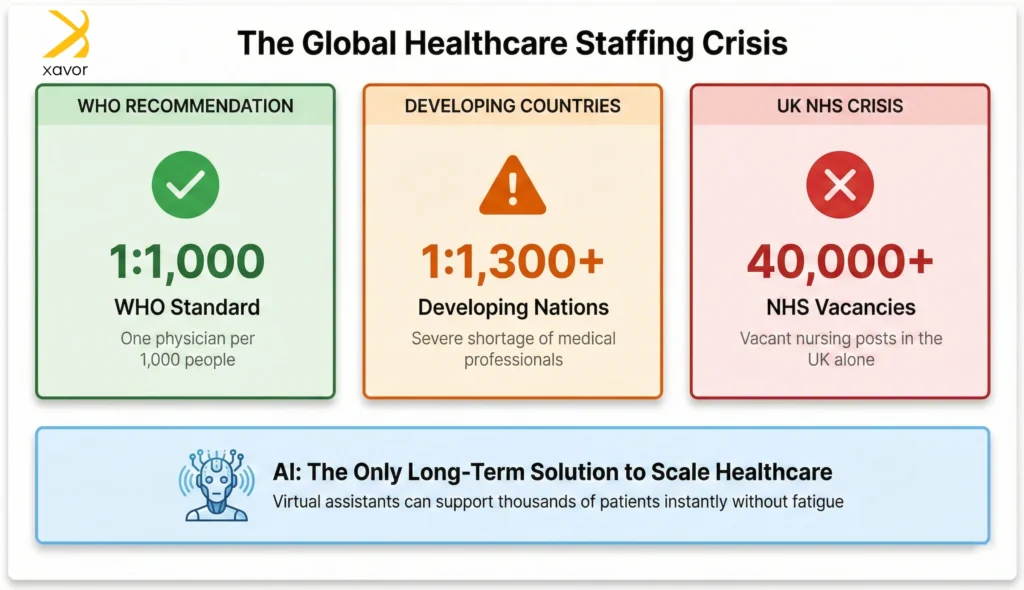
Developed international locations even have their very own healthcare employee shortages due to an ageing inhabitants. Presently, the Nationwide Well being Service (NHS) within the UK has over 40K vacant nursing posts, in line with tough estimates. In Italy, there at the moment are complete cities crammed with the aged because the nation’s beginning price is at an all-time low. Stopgap options like immigration to fill the employee scarcity within the healthcare programs in such international locations will not be viable in the long term.
AI in healthcare is the one long-term repair to scale healthcare providers with the rising demand. For instance, conversational AI in healthcare makes the complete course of asynchronous and parallel. Utilizing digital assistants, a clinician can assist hundreds of sufferers immediately and with out fatigue.
AI triage chatbots are additionally good examples of AI in healthcare. Such options can be utilized to:
- Acquire signs in a structured kind
- Ask follow-up questions dynamically
- Route sufferers to the best degree of care
That is particularly vital for distant and underserved populations, the place entry is restricted not by demand, however by availability.
4. Higher outcomes and preventive care
Conventional healthcare setups prioritize amount over the standard of the providers supplied as a result of that is the place their bread and butter is. So long as a affected person retains coming for checks and scans, it’s worthwhile for healthcare organizations.
Recent advances in healthcare display how quickly the shift towards value-based, data-driven care is accelerating. The way forward for AI in healthcare is linked to value-based fashions. Suppliers underneath this method are rewarded for:
- Stopping issues
- Lowering readmissions
- Managing persistent illness successfully
- Conserving sufferers wholesome outdoors the hospital
All of this results in higher affected person outcomes and experiences and retains the inhabitants general wholesome.
5. Knowledge integration in fragmented programs
The Johns Hopkins All Kids’s Hospital in Florida has greater than 150 terabytes of pediatric very important indicators knowledge. And these sorts of numbers are nothing out of the atypical for large-scale hospitals and healthcare establishments. However that knowledge is usually scattered throughout completely different programs, which don’t combine very nicely or in any respect.
So, think about a situation with a kind 2 diabetes affected person. The EHRs report their previous admissions and HbA1c outcomes from clinic visits, whereas the hospital lab system holds the blood glucose and kidney operate checks. In the meantime, the affected person wears a wearable glucose monitoring gadget that tracks each day blood sugar fluctuations, meals, train, and sleep cycles. The physician must know every one among this stuff for analysis.
Now, take into account how AI improvements in healthcare make this course of clean and straightforward. As a substitute of changing current particular person software program, AI pulls knowledge from a number of sources, cleans it, and turns it right into a single, usable view of the affected person. It might probably hyperlink previous diagnoses, check outcomes, drugs, and up to date vitals into one coherent timeline.
Actual-world AI use circumstances in healthcare
On this part, we’ll dive deep into understanding some real-world AI use circumstances in healthcare, together with all their technical particulars and trivia.
1. Moorsfield Eye Hospital: AI stopping blindness
There may be an Islamic saying that if God takes somebody’s eyesight, then there is no such thing as a compensation for them besides paradise. It’s a really highly effective quote to consider it. The lack of contact, odor, or listening to could be partially compensated by means of different senses. However blindness deprives an individual of actuality in a approach that’s tough to reconstruct by means of different senses alone.
A critical eye situation known as age-related macular degeneration (AMD) is among the main causes of blindness worldwide. Moorfields Eye Hospital in London is among the world’s oldest specialist eye hospitals, energetic since 1805. Clinicians there evaluation hundreds of OCT scans to deal with sufferers with AMD each week.
There are two types of AMD:
- Dry AMD is extra widespread in older adults and normally causes delicate imaginative and prescient loss
- Moist AMD is much less widespread however way more critical, typically resulting in everlasting blindness
About 15% of sufferers with dry AMD finally develop moist AMD. The issue is that this development is difficult to foretell. OCT scans are extremely detailed 3D photographs of the again of the attention. Studying them manually is time-consuming, and delays can imply slower disease detection.
Earlier analysis confirmed that AI may already assist docs analyze these scans quicker and spot current indicators of moist AMD that want pressing therapy. So, in 2018, Moorfields partnered with Google DeepMind to develop an AI system that would assist clinicians interpret OCT scans extra effectively.
The important thing applied sciences used on this instance of AI in healthcare are:
- Superior deep studying fashions to investigate OCT photographs pixel by pixel
- Cloud computing for giant datasets and excessive computational energy
- Picture segmentation fashions to establish and separate retinal layers
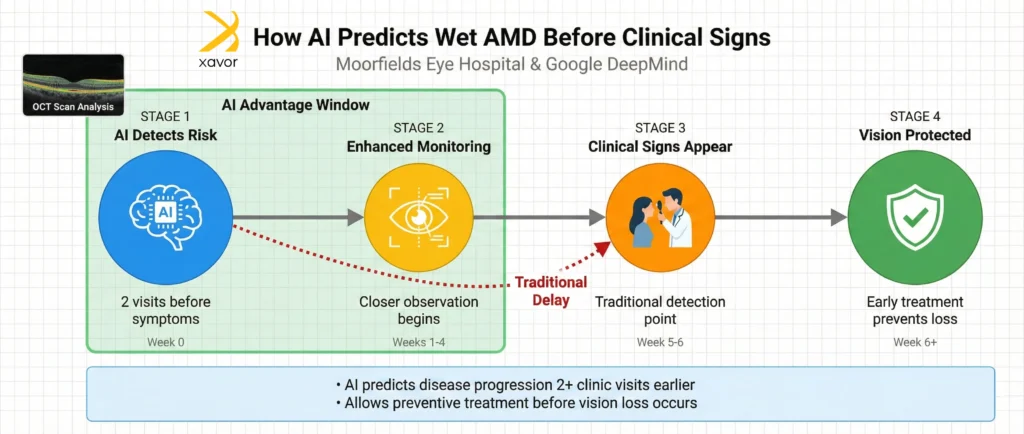
Utilizing these AI options in healthcare, the mannequin realized which modifications normally seem earlier than moist AMD develops.
Consequently, the AI was in a position to predict that an eye fixed was more likely to worsen a minimum of two clinic visits earlier than clear scientific indicators of moist AMD grew to become seen. In sensible phrases, this implies docs may very well be warned earlier, monitor sufferers extra intently, and begin therapy sooner, which may doubtlessly stop critical imaginative and prescient loss.
2. OSF HealthCare: AI assistant
OSF Healthcare is a non-profit built-in healthcare platform in the US. Their workers and name facilities have been inundated with overwhelming questions from sufferers, however the system for getting solutions was fragmented. Folks typically needed to wait for hours or navigate complicated web sites simply to determine what to do subsequent.
To resolve this matter, OSF Healthcare partnered with AI providers in healthcare to implement a healthcare-focused AI digital assistant designed for navigation and determination assist on their web site. It’s a good instance of conversational AI solutions in healthcare, which makes use of pure language processing (NLP).
As a substitute of calling or looking out by means of a number of pages, sufferers can work together with the AI assistant to:
- Test signs
- Schedule appointments
- Select caregiving supply methodology
- Discover solutions to scientific and different questions
Furthermore, the AI assistant is obtainable 24/7, together with nights and weekends, when name facilities are sometimes unavailable.
OSF reviews that 1 in 10 sufferers now work together with the AI assistant throughout their care journey, which is sufficient to say that sufferers are truly discovering worth within the answer.
3. Sanofi: Expedite drug discovery
Sanofi is a worldwide pharmaceutical firm centered on R&D-driven biopharma. It develops medicines and vaccines for varied circumstances like most cancers, diabetes, immunology, neurology, and different uncommon ailments. To enhance each affected person outcomes and inner effectivity, Sanofi has utilized AI throughout all the drug lifecycle.
Drug discovery is gradual and costly. Discovering a molecule that works and is secure to make use of can take years. On high of that, some vital illness targets have been historically thought-about “undruggable” as a result of they’re tough to focus on with typical strategies. Sanofi, with the ambition to alter that, partnered with a biotech firm for AI-first drug discovery.
The core AI options in healthcare used on this case examine are:
- Deep studying fashions skilled on organic and omics knowledge
- Graph neural networks (GNNs) to mannequin molecular buildings
- Generative AI in healthcare designs fashions to create novel drug molecules
- Bioinformatics pipelines to combine multi-omics knowledge
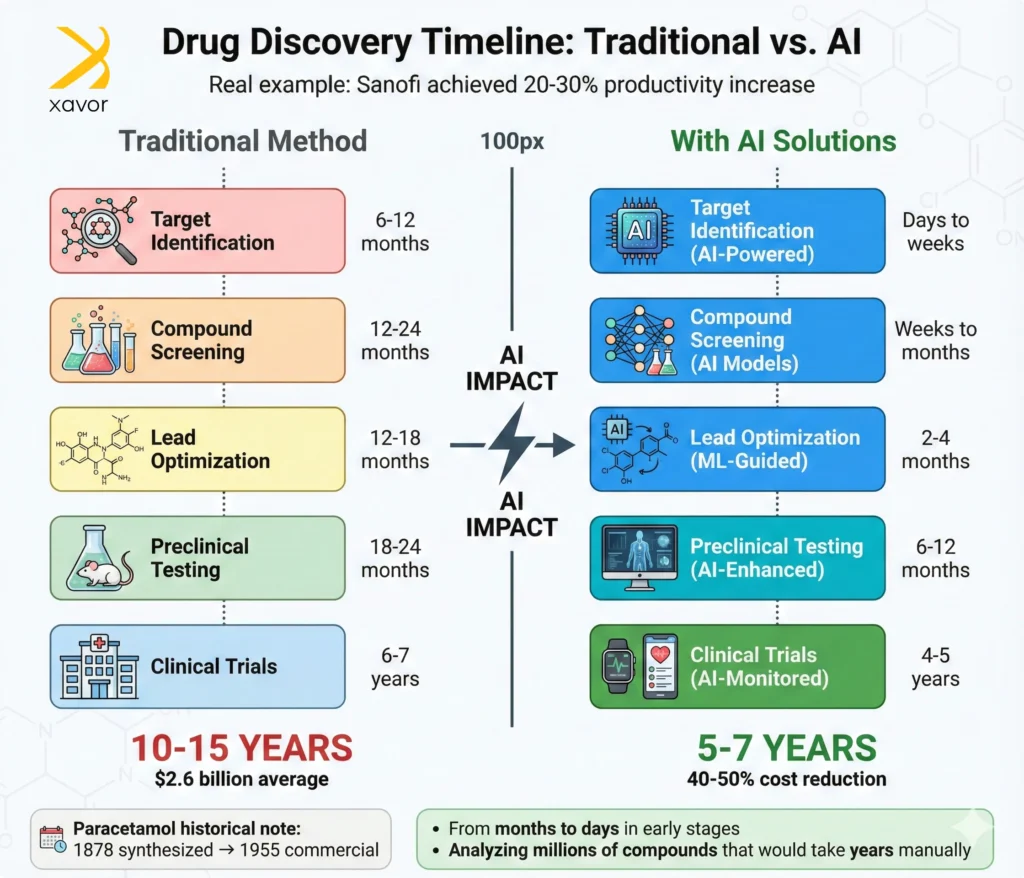
Utilizing AI in healthcare allowed Sanofi to investigate large organic datasets, which principally tells proteins which can be most related to a illness. Narrowing thousands and thousands of potentialities all the way down to a small quantity price testing within the lab shortened analysis cycles from months to days, and elevated drug discovery productiveness by 20–30%.
4. Cleveland Clinic: AI-assisted robotic surgical procedure
Cleveland Clinic is among the world’s main educational medical facilities and among the many earliest and largest adopters of robotic surgical procedure. It has carried out tens of hundreds of robot-assisted surgical procedures utilizing a complicated robotic platform.
The healthcare group deployed the robotic surgical procedure platform throughout a number of departments. Surgeons’ hand actions are captured on the console and translated into a lot smaller, extra exact actions by robotic arms, which permits surgeons to function with sub-millimeter precision.
Moreover, the system gives a magnified, 3D, high-definition view of the surgical subject utilizing computer vision. Actual-time picture processing enhances distinction and depth notion. Consequently, surgeons see anatomy extra clearly than with the bare eye or customary laparoscopy.
Robotics is basically one of many fascinating purposes of AI in healthcare. The extent of precision and human-machine interplay in robotic surgical procedure is a chunk of artwork.
5. NaviGait: AI-powered dementia care
NaviGait is a spin-off by Xavor that builds AI-powered robotics for aged care, particularly for sufferers with dementia and Alzheimer’s illness. In simply the beginning of this 12 months, we noticed the tragic deaths of Hollywood legend Gene Hackman, who was affected by late-stage dementia, and his spouse, Betsy. Sadly, such grim tales at the moment are not that unusual.
Our purpose with NaviGait is to stop such conditions from taking place. Navi is an AI-enabled healthcare robotic developed by NaviGait, which makes use of AI and robotics to enhance affected person care, particularly for older adults and people with cognitive or mobility challenges.
The robotic is designed as a social companion and assistive robotic, geared up with AI-driven notion, navigation, and interplay capabilities. It makes use of applied sciences, similar to:
- ROS/ROS2 working system
- Gait and motion evaluation
- Edge AI inference
- Newest speech-to-text (STT) softwares and text-to-speech (TTS) fashions
Navi follows and engages sufferers, assists with reminders, tracks emotional and motion patterns, and gives companionship. It does so whereas preserving caregivers knowledgeable of modifications in well-being.
The purpose is to cut back caregiver burden, detect early well being points, and improve high quality of life for seniors.
Way forward for AI in healthcare: Key developments in 2026
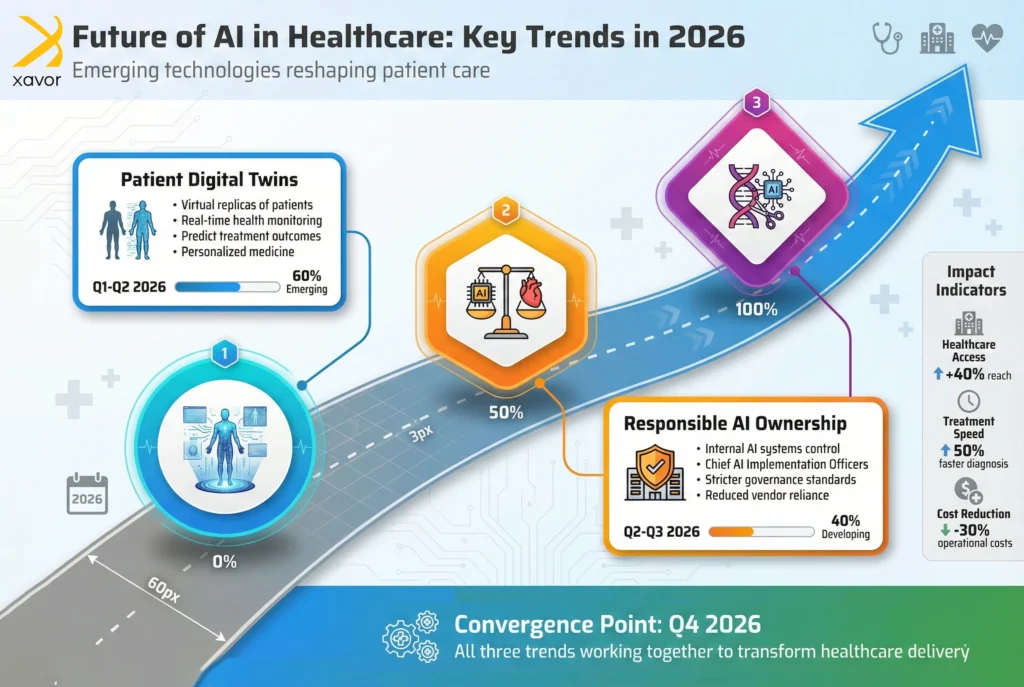
What does the longer term maintain for AI in healthcare? Perhaps a clairvoyant or a fortune cookie can inform the precise reply. Nevertheless, the good thing about science is that it may well additionally make nice predictions with out the imprecise, serendipitous type of psychics or historical knowledge.
Primarily based on business developments and knowledge, listed below are some rising developments of AI in healthcare which may change the guts of the business.
1. Affected person digital twins with AI
It’d sound a bit dystopian as a result of whenever you speak about creating “twins” of a affected person, folks appear to think about one thing like cloning. However digital twins in healthcare are completely completely different, and far nearer than you may suppose. A digital twin is a digital, real-time reproduction of a bodily entity. Digital twins are already utilized in manufacturing, engineering, and different fields.
However now, AI within the medical subject is bringing this expertise to healthcare suppliers. A human digital twin is a residing digital mannequin of an individual’s physique, constructed utilizing AI and real-time knowledge. It mirrors how a affected person’s physique behaves and modifications over time.
Utilizing wearable units, it collects knowledge and makes use of ML fashions to know how the affected person’s physique works and the way it reacts to illness or therapy.

If carried out correctly, affected person digital twins can enter healthcare right into a fully completely different period. Human digital twins can transfer healthcare from trial-and-error to prediction and precision. And that’s simply the beginning, it may well make the work of healthcare professionals easy and secure, similar to:
- Medical doctors can personalize therapies by testing therapies just about.
- Surgeons can rehearse complicated procedures on a affected person’s digital anatomy to cut back danger.
- Clinicians can monitor sufferers remotely to catch issues early utilizing wearable knowledge.
In analysis, digital twins can speed up drug discovery and scientific trials by simulating drug and immune responses earlier than human testing. Lastly, in medical training, college students might not have to chop open poor frogs to be taught the anatomy of the human physique. They will observe procedures safely on lifelike, digital sufferers.
2. Accountable possession of AI in healthcare
As of now, many healthcare corporations use third-party companions, similar to subsidiaries or AI providers in healthcare, to construct or run their AI programs. There are some apparent causes for that, like you don’t anticipate a hospital to have a staff of AI consultants and knowledge scientists. Nevertheless, circumstances demand that this strategy has to change going into 2026.
Functions of AI in healthcare will solely enhance, and if one thing goes unsuitable, for instance:
- Affected person knowledge is mishandled
- An AI system makes unsafe or biased choices
- Guidelines or laws are damaged
Who will then take accountability? Regardless of if it’s the third social gathering who made the error, it’s the hospital or the healthcare group that has to reply for it. Sufferers put their belief within the hospital, not some AI lab working within the background. For healthcare organizations, it may trigger irreparable reputational injury.
Due to this fact, we predict that for AI in healthcare to grow to be actually built-in, hospitals must cut back their reliance on exterior distributors and give attention to:
- Proudly owning extra of their AI programs internally, together with knowledge, fashions, and determination logic.
- New roles like Chief AI Implementation Officer (CAIO) in healthcare settings to supervise AI options in healthcare.
- Stricter governance and accountability, with clearer accountability for AI outcomes.
- Fewer however extra tightly managed companions, chosen for transparency and compliance.
- Constructed-in danger, ethics, and compliance checks from the beginning.
3. AI-powered gene modifying
People have been crossbreeding animals and vegetation for eons by including new genes to make them extra productive or disease-resistant. However gene modifying does extra than simply add genetic traits. It makes exact modifications to the very DNA of issues, which wasn’t potential till CRISPR (Clustered Repeatedly Interspaced Quick Palindromic Repeats) appeared on the scene.
Sure, there may be a lot debate across the ethics of gene modifying and whether or not it may be completed safely. We depart the moral facet of it to your discretion, however right here we need to speak about AI options in healthcare that may assuage its security issues.
CRISPR is a revolutionary biotechnology that enables scientists to chop and modify DNA at particular areas. The tech itself is highly effective however very unpredictable. Whereas it may well exactly lower DNA to delete or insert genes, outcomes typically differ from cell to cell, and off-target edits can introduce errors. And this isn’t simply introducing errors in a pc code that you could repair later by means of software program testing providers. A defective DNA “edit” in CRISPR may, at worst, trigger:
- Most cancers
- Dangerous immune reactions
- Breakdown of vital organic capabilities
- Passing down genetic errors to future generations
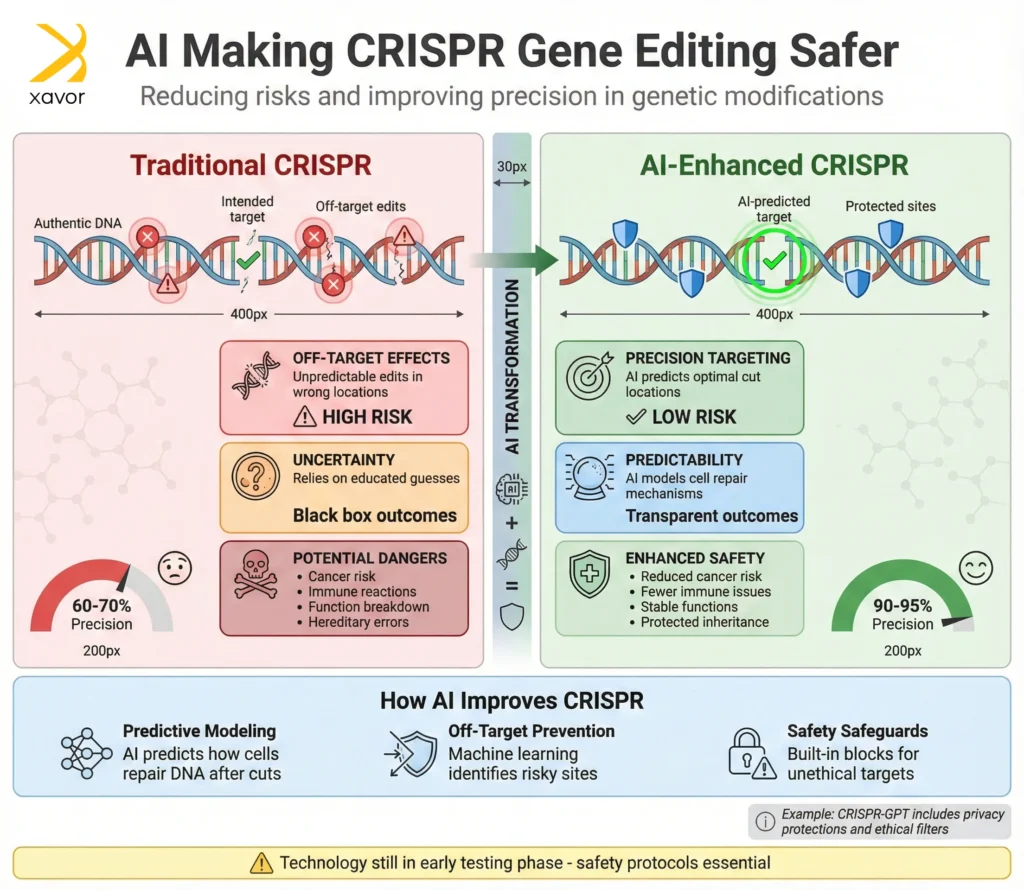
So, the protection issues are legit and too harmful to disregard. What makes it worse is that researchers have historically needed to depend on educated guesses, which makes CRISPR really feel like a black field.
AI in healthcare can assist open that black field. An AI mannequin is already underneath testing to predict how cells will restore DNA after a CRISPR lower, which may permit scientists to design edits that work with the cell’s pure restore course of reasonably than in opposition to it. Furthermore, agentic AI solutions in healthcare can considerably cut back off-target results in early checks.
That stated, these AI options in healthcare are nonetheless inchoate. Scientists are conscious of dangers like AI hallucinations and misuse, so programs like CRISPR-GPT embrace safeguards to dam ethically delicate targets and hold genetic knowledge non-public. But when issues stay heading in the right direction, AI in healthcare will undoubtedly make CRISPR safer and extra predictable.
Main challenges of AI in healthcare in 2026
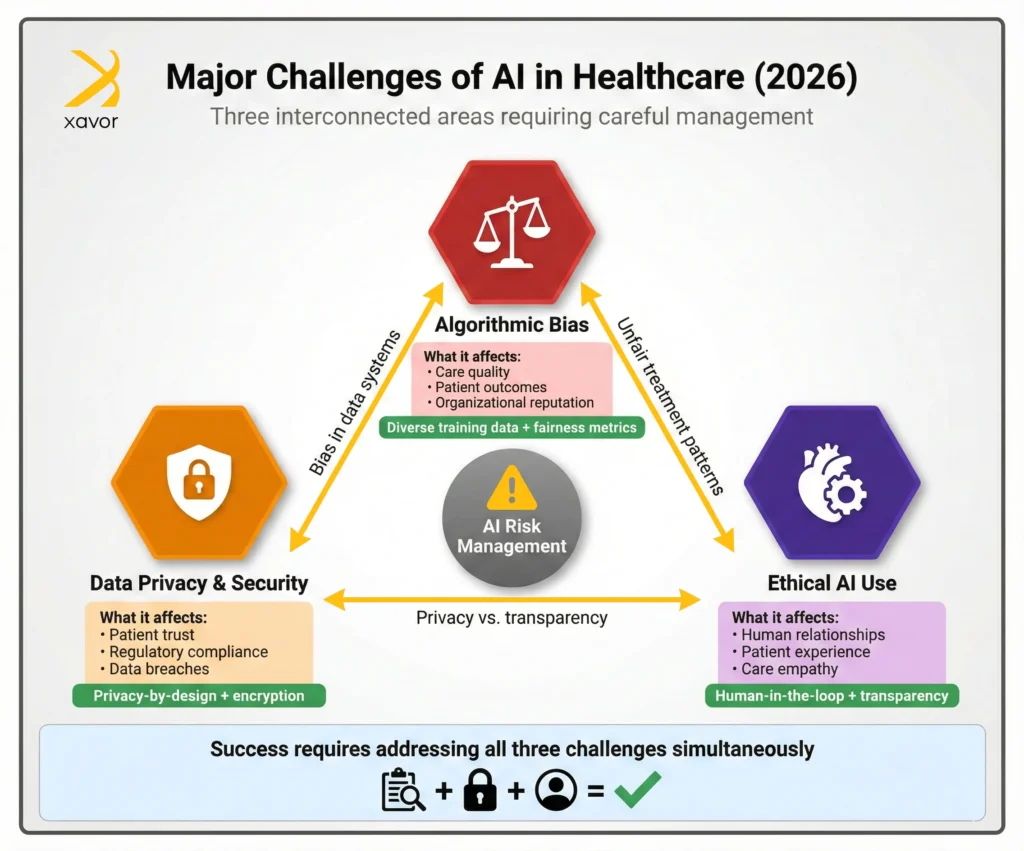
TL; DR
| Problem | What it impacts? | Answer |
| Algorithmic bias | Care high quality Affected person outcomes Organizational fame |
Use various and consultant coaching knowledge. Apply equity metrics and audit fashions earlier than and after deployment, whereas repeatedly monitoring outcomes. |
| Knowledge privateness and safety | Affected person belief Regulatory compliance Organizational fame |
Acquire solely obligatory knowledge, anonymize and safe it. Maintain knowledge native when potential, strengthen cybersecurity controls, and take sufferers in confidence. |
| Moral AI use in healthcare | Clinician-patient relationship Affected person expertise Care high quality Lengthy-term AI use |
Use AI to reinforce human staff. Maintain clinicians within the determination loop and guarantee transparency and explainability. Prioritize workflows that prioritize empathy and affected person expertise over effectivity alone |
Traditionally, the healthcare business has been gradual to undertake new expertise. And one main motive for that’s the delicate nature of the business. IBM’s coaching information within the 70s nonetheless rings true that, “A pc can by no means be held accountable, subsequently a pc mustn’t ever make a administration determination.” That’s extra pertinent for the healthcare business than some other subject as a result of you’re accountable for human lives.
There are specific dangers of AI in healthcare that should be addressed for AI in healthcare to grow to be actually viable.
1. Algorithmic bias
Sadly, the historical past of healthcare is tainted with bias and even discrimination in opposition to sure teams or folks. The Tuskegee syphilis examine is kind of notorious on this regard as a result of it reveals that human biases don’t even spare a noble career like healthcare.
These biases can creep into AI algorithms as a result of they’re skilled on large knowledge generated by none aside from people.
Algorithmic bias can result in AI programs making unfair choices that drawback sure teams, actually because they be taught from historic knowledge that already accommodates social inequalities or as a result of designers select flawed fashions. For instance, a most cancers detection algorithm that misses tumors on darker pores and skin can put somebody’s life in jeopardy. These biases don’t simply hurt folks however additionally erode belief and might expose organizations to authorized and regulatory penalties.
Lowering bias requires greater than simply higher code. Technically, groups want various coaching knowledge, equity metrics, and bias-testing instruments to identify unequal outcomes early. Organizationally, fashions have to be audited earlier than and after deployment, with outcomes monitored throughout completely different teams and documented clearly.
2. Knowledge privateness and safety
By no means conceal something out of your lawyer and physician. This adage is as true because it will get, and positively many individuals stay by it. Due to this fact, healthcare knowledge is extremely delicate, and any breach of sufferers’ digital well being data (EHRs) can expose sufferers’ confidential knowledge to malicious actors.
Coaching and operating AI programs require healthcare organizations to acquire delicate medical data. With out robust controls, this will result in an elevated danger of knowledge leaks or cyberattacks. AI programs even have some structural vulnerabilities, just like the lethal trifecta, which makes them vulnerable to threats like immediate injections. As AI programs grow to be extra data-hungry, the relationship between artificial intelligence and big data turns into more durable to separate. Due to this fact, poorly secured affected person knowledge used for AI coaching can unintentionally expose deeply private info.
To mitigate safety issues, AI in healthcare should comply with a privacy-by-design strategy, which implies:
- Gathering solely obligatory knowledge, anonymizing it, and preserving knowledge native every time potential.
One other rising development to include AI options in healthcare is giving sufferers management of their very own medical data. As a substitute of knowledge being scattered throughout hospitals and programs, sufferers can acquire, set up, and handle their full medical historical past in a single place and resolve the way it’s shared. This makes well being data simpler to make use of and provides sufferers extra management over their very own knowledge.
3. Moral AI use in healthcare
“Nursing is an artwork: and whether it is to be made an artwork, it requires an unique devotion as laborious a preparation as any painter’s or sculptor’s work… It is among the Fantastic Arts: I had nearly stated, the best of Fantastic Arts.”, stated Florence Nightingale. She fantastically captures the essence of healthcare, which is greater than correct diagnoses or environment friendly workflows. It’s basically about human relationships.
Belief, empathy, and understanding typically affect outcomes as a lot as scientific precision. Relying an excessive amount of on AI in healthcare could make sufferers start to really feel processed reasonably than cared for. If clinicians rely closely on AI options in healthcare, affected person interactions might grow to be shorter, extra transactional, and extra protocol-driven. Over time, this will erode empathy and make sufferers really feel unseen or unheard, particularly these with complicated, persistent, or poorly understood circumstances.
The answer to this danger of AI in healthcare is to assist, not substitute, human relationships in healthcare. AI ought to deal with administrative and analytical duties, so clinicians have extra time and a focus for sufferers, whereas remaining choices stay firmly in human arms. Techniques have to be clear and explainable, and workflows ought to prioritize empathy and affected person expertise over velocity alone.
When designed round human values and accountability, AI in healthcare can create extra space for compassion as a substitute of eroding it.
Conclusion
You possibly can have a thousand issues in life, however when you may have a well being drawback, you solely have one. Entry to healthcare is a proper, not a privilege, in line with the WHO, main human rights organizations, and the UN. But thousands and thousands of individuals around the globe are nonetheless denied well timed, reasonably priced, and high quality care, which is an indictment for us as a worldwide group.
This hole is to an incredible extent brought on by strained programs, fragmented knowledge, restricted workforce capability, and gradual decision-making. AI in healthcare, if used with care and accountability, presents a method to ease these pressures. It might probably assist healthcare programs attain extra folks, detect sickness earlier, assist clinicians extra successfully, and shift care from response to prevention.
However expertise alone is not going to repair healthcare. The true affect will rely upon how thoughtfully it’s carried out. The way forward for healthcare will mirror not simply what AI can do, however what we select to do with it.
Associate with Xavor to design safe, moral, and scalable AI options that enhance healthcare outcomes whereas preserving folks on the heart of care. Drop us a line at [email protected] to debate your healthcare workflows, and we’ll information you on how AI can enhance it.
Let’s flip expertise into entry, intelligence into fairness, and innovation into real-world affect.
Concerning the Creator

Umair Falak is the web optimization Lead at Xavor Company, driving natural progress by means of data-driven search methods and high-impact content material optimization. With hands-on expertise in technical web optimization and efficiency analytics, he turns search insights into measurable enterprise outcomes.
FAQs
In healthcare, AI may help clinicians and organizations analyze knowledge, predict dangers, and automate routine duties. It helps earlier and extra correct diagnoses, permits personalised therapy plans, and reduces administrative burden by means of automation. General, AI in healthcare permits healthcare programs to enhance their operational effectivity and supply higher care high quality.
There are some disadvantages of AI in healthcare if not dealt with correctly. Dangers similar to algorithmic bias, knowledge privateness and safety, and over-reliance on AI might negatively affect affected person outcomes. With out robust governance and regulation, AI programs may also introduce moral, authorized, and compliance dangers for healthcare organizations.
Generative AI is a department of AI that may generate human-like content material, similar to textual content, photographs, or movies. Generative AI in healthcare can create new content material, similar to scientific notes, summaries, reviews, photographs, or therapy insights. It learns patterns from massive quantities of medical knowledge to automate documentation, synthesize affected person data, assist scientific decision-making, and enhance affected person communication.
Source link
latest video

latest pick



news via inbox
Nulla turp dis cursus. Integer liberos euismod pretium faucibua



