


Cloth Dye Manufacturing facility – Information to Working with a Dye Home – A Look Behind The Seams
Just a few weeks in the past, I shared a put up that takes you inside a cloth dye lab and teaches you all about how lab dips are made in a dye home. Now, this week, I’m going to inform you all about what goes on inside a cloth dye manufacturing unit after the lab dip approvals, and the order strikes to bulk.
Dye homes are considered one of my favourite stops within the textile manufacturing provide chain for two causes! The primary, they’re a spectacle. Think about a complete warehouse of various machines larger than 16-wheelers. And, the second, dye homes are additionally a spot the place artwork meets science. It’s the place we create coloration, however to make that coloration, you want a deep understanding of chemistry.
Get able to study all about how materials get their coloration in dye homes! This put up is for all my textile nerds on the market.
WHAT YOU WILL LEARN
PREPARING FABRICS FOR THE DYE PROCESS
PFD material prepared for dye
There are some things that have to occur earlier than a cloth is able to get coloration…
THE PFD PROCESS
Step one in a bulk material manufacturing order is eradicating all the colour. That is achieved by the PFD, often known as the “put together for dye” material course of. The PFD course of is a particular sort of wash that improves material dyeing. And, that is necessary, as a result of when materials dye extra successfully, there are fewer model rejections, which means, much less waste. And, happier clients general.
WASH
Step one within the PFD course of includes the dye home eradicating the sizing from the material yarns. Industrial weaving and knitting machines are extraordinarily highly effective, and create materials sooner than the human eye can see. As a result of the yarns are shifting at such a quick price, they’ll turn into vulnerable to break. To forestall this, sizing coats the yarn, to assist reinforce its power. Sizing will be made from pure components like cornstarch, or synthetics similar to petroleum. However, whereas sizing retains a cloth sturdy, it additionally prevents coloration from penetrating.
Consider it this manner: If you had been little, did you ever write a secret message on paper with a white crayon after which paint over it with watercolors to disclose the message? Sizing is rather like that; it repels the dye and retains the yarn white. So, the PFD course of makes use of a lightweight detergent to take away it.
WHITEN
The second step of the PFD course of includes the material dye manufacturing unit frivolously bleaching the material. In its preliminary state, most, if not all, materials are barely yellow, which impacts the ultimate coloration. For instance, if you’re attempting to dye a cloth a lightweight pink coloration and the material is yellowish, the colour goes to come back out trying orange (since pink and yellow mix to make orange). By beginning with a pure white base, we make the method of coloration matching so much simpler.
As soon as the material goes by the PFD course of, it might transfer on to the large dye machines.
HEAT TREATING STRETCH FABRICS
BTW – there’s another course of f a cloth has stretch fibers in it, like spandex, elastane, or lycra. It wants a particular course of of warmth remedy earlier than dyeing. Not each dye home will do that further step, however the good ones who care about high quality will.
This particular warmth remedy will assist the stretch fibers maintain their stretch and restoration by the whole dye course of. That is actually necessary from a high quality standpoint. If the stretch materials don’t get they warmth remedy, they have a tendency to stretch out rapidly, making a garment that may disappoint clients.
WATCH THE VIDEO
Not within the temper to learn anymore? Watch the video (no judgment).
WHAT ALL DYE MACHINES HAVE IN COMMON

One of these dye machine is particularly for cotton materials
What do all dye machines have in widespread? They contain motion and warmth.
MOVEMENT
For cloth to dye nicely, it must be always shifting by the dye tub (water + dye). If the material and water sit, the dye (which is heavier than water) will begin to accumulate in the direction of the underside of the machine and create darker patches of coloration on the material.
HEAT
The material must be sizzling to dye nicely. That’s as a result of the warmth will open up the fiber and permit the dye molecules to penetrate the fiber.
Do you know that pink colours typically have the biggest molecules, so they’re the toughest to dye? That’s the reason new pink clothes will typically flip your whole laundry pink. Mainly, all the molecules that didn’t totally penetrate the fiber, are washing off.
A technique to assist pink fibers keep on with the material higher is to make the material tremendous sizzling. The extra warmth, the extra the fiber opens up, and the extra the bigger pink dye molecules get in.
3 DIFFERENT TYPES OF DYE MACHINES IN A DYE HOUSE
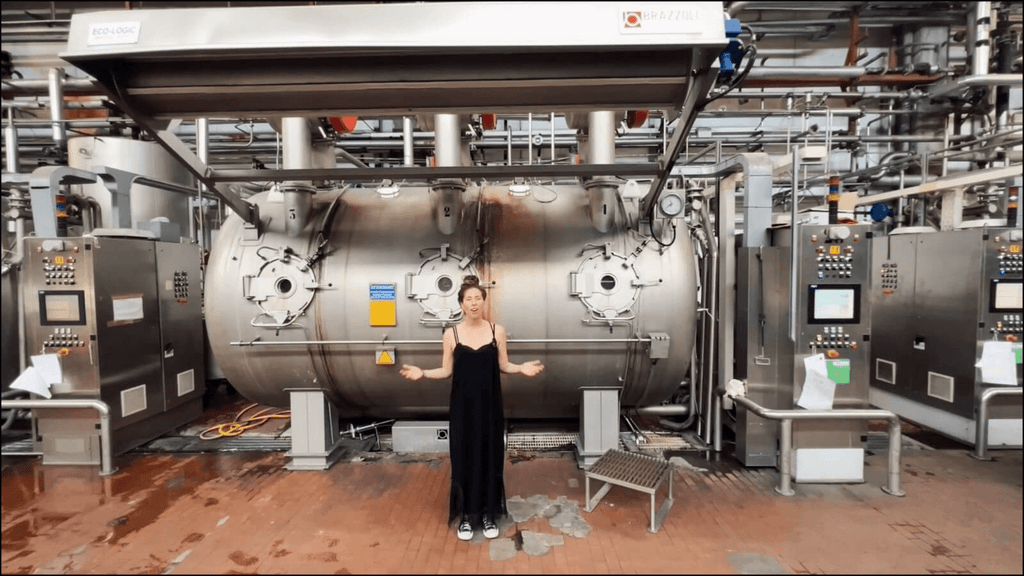
This dye machine is for all various kinds of materials, and will be sectioned off into 3 smaller vats to dye smaller MOQs
Now that you recognize what all dye machines have in widespread, let’s discuss what makes them totally different. There are three predominant forms of industrial dye machines – Polyester, Cotton, and All-Goal. Every of them operates in a different way and is made for various kinds of fibers. Let’s break them down.
POLYESTER MACHINES
Polyester dye machines are lengthy and snake-like. The tube, roughly 20 ft in size, is totally stuffed with water and dye, and the material is snaked by the lengthy tubes for the whole course of.
COTTON MACHINES
Cotton dye machines seem like big doughnuts. The manufacturing unit will fill the machines only one/2 with the dye tub. The material then loops round and across the circle, alternating between immersion within the dye tub and publicity to air. This goes on and on for typically an hour.
ALL-PURPOSE MACHINES
All-purpose machines are able to dyeing any sort of fiber. They seem like big cylinders. Sometimes, one of these machine is the biggest and might dye essentially the most material, accommodating as much as 600 kilos! What’s cool about these machines is that we will part them off. The complete machine can course of an enormous order, or it may be break up into 3 separate compartments, every able to dealing with a extra manageable 200-kilo amount in three totally different colours. Whereas it won’t be the perfect dye system for the precise fiber, this machine is helpful for smaller orders.
LOW MOQ FABRIC DYEING HACK
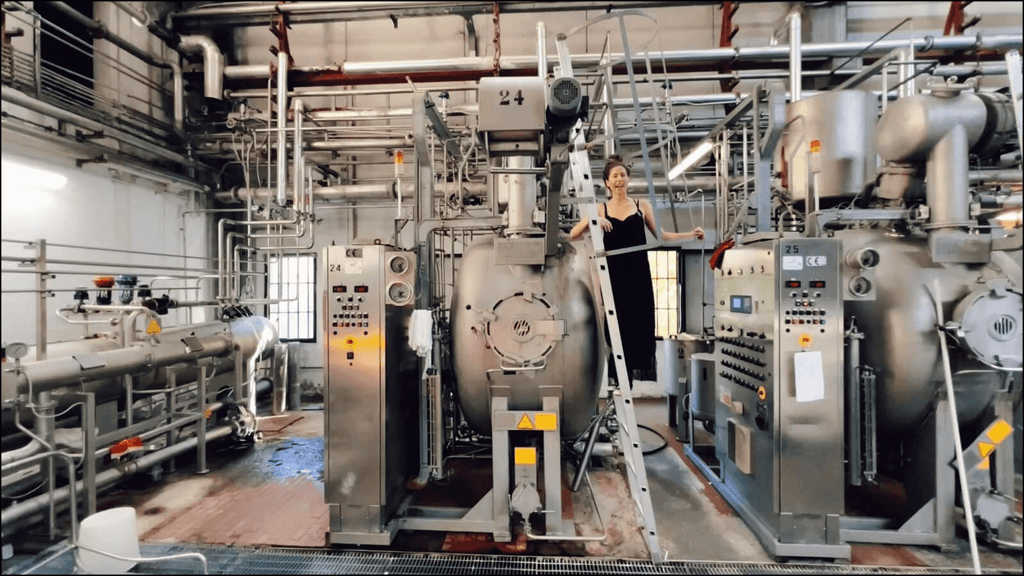
This can be a pattern machine, however look how large it’s!
Hey, my vogue startup manufacturers? Do you want a very small quantity of cloth customized dyed? Do that hack…
SAMPLING MACHINES
Most material dye factories may have sampling machines, that are precisely just like the bigger machines however smaller. Totally different pattern machines can run wherever from 10 to 100 meters, or 1-2 rolls of cloth.
Usually, sampling machines are used to create a number of rolls of cloth that may permit manufacturers to make their pre-production samples earlier than they place their manufacturing orders.
However, many dye homes will let small manufacturers place pattern orders as their manufacturing order. This fashion, they’ll get began with their customized materials however don’t should decide to the big minimal portions that the large machines require.
The one draw back is that the value is considerably larger. So, if a manufacturing unit has a 1000-meter minimal, and also you, as a brand new model, solely want 100 meters, the value for the smaller order will probably be wherever from 2-5 instances the true manufacturing value. That’s a giant improve! However, for my part, it’s nonetheless price it to have the ability to take a look at the design with a small order and get your foot within the door by constructing a relationship with an expert provide chain companion.
GARMENT DYE
There may be one final sort of machine known as a garment dye machine. One of these machine doesn’t dye materials, however as a substitute it’s used to dye clothes that had been already reduce and sewn.
One of many advantages of garment dying is that manufacturers are in a position to place larger MOQ orders in PFD, after which dye the clothes totally different colours at a later date.
A draw back to garment dying is that clothes are inclined to shrink so much within the course of.
DRYING RANGE
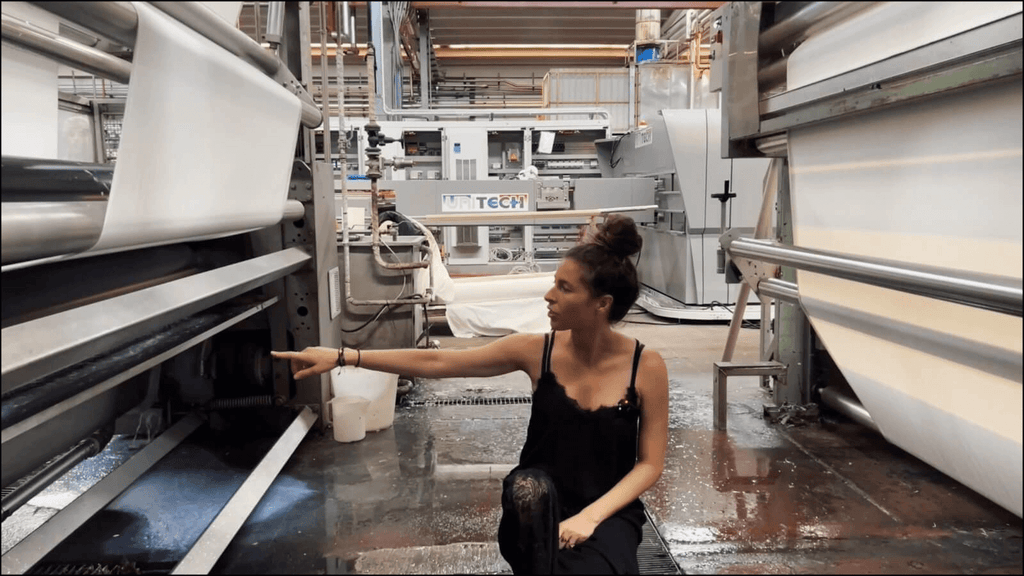
The material is handled with a softener answer earlier than it goes by the drying a part of the machine
After the materials are dyed, they have to be dried, and, right here is how that occurs:
- Moist material is fed into the dry vary.
- Then, typically, the material will get a softening remedy or a ultimate rinse.
- After, they clip the material onto a tenter body – a particular machine holds the width of the material in place, making certain uniform drying.
- The material is “cured” or handed by an extended oven for drying earlier than its ultimate step (watch the video to see simply how lengthy it’s – it simply retains going.
-
As soon as the material is dries, considered one of two issues happen:
- If the material is prepared for the client, they roll it up.
- If the material wants one other remedy, like printing, they fold it.
INSIDE THE COLOR KITCHEN

There may be dye inside all of those large inexperienced drums
These large machines take loads of dye. And, the colour kitchen is the place it’s all saved.
In an older dye home, wheelbarrows stuffed with blended colours are carted from the colour kitchen to the machines. However, in trendy factories like this one in Italy, the colours are drawn up by what resembles an enormous vacuum cleaner hose after which conveyed by a sequence of tubes on to the dyeing machine.
FINISHING TECHNIQUES
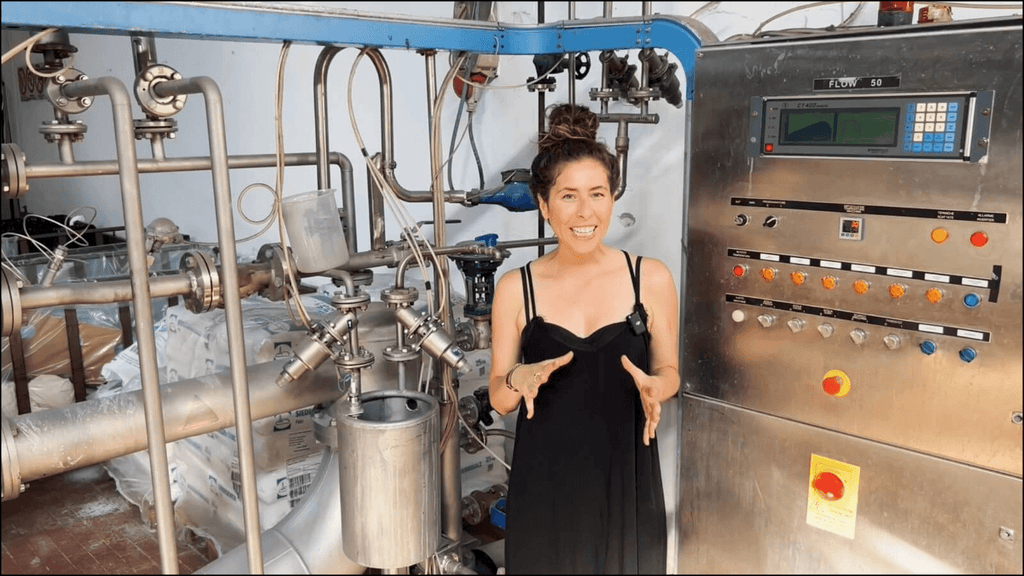
That is one other pattern machine, however for poly materials
It’s also widespread for a dye home do not simply do dying providers, they often additionally do different issues like material ending therapies. These will be both chemical or mechanical. An instance of a chemical end could be a water-proof chemical coating. And, an instance of a mechanical end is sand-washed denims, the place sand is used to put on down the material. Each are a straightforward means so as to add textural selection and get totally different seems utilizing the identical material.
Personally, I feel each model ought to learn about these material ending hacks. Listed here are a few of my favorites:
MERCERIZATION
Mercerization is the method of immersing cotton materials in a sodium hydroxide answer. The pure form of a cotton fiber, when considered underneath a microscope after slicing a slice from it (the technical time period is cross-section), resembles a bean. However, what the sodium hydroxide answer does is trigger the fiber to swell and turn into spherical.
The method provides luster and power to the material. Typically, the extra lustrous a fiber, the upper the standard (learn: luxury). And, who doesn’t need a stronger material that may last more?
To summarize, mercerization is a triple win. The method is environmentally protected, and inexpensive, and creates a textile that customers typically choose.
ENZYME-WASH
Enzyme washes are tremendous attention-grabbing as a result of they’ll do the whole lot, together with, in some circumstances, altering the colour of the material. Enzymes are environmentally pleasant, and, for those who ask me, are one of many keys to a extra sustainable future in material processing. I might want to create a weblog put up about enzymes sooner or later – as a result of I might discuss them for days. For now, you possibly can take a look at this cool company, Novozymes, that focuses on them.
MICRO-FINISHES AND OTHER MECHANICAL FINISHES
Turning French terry material into the sort of fleece you discover in hoodies, and creating that smooth, fuzzy feeling on a flannel, are each mechanical ending processes. Basically, the material passes by a machine with massive wire bristles, considerably resembling a canine hairbrush. These brushes gently tough up the material, leading to a fuzzy end. On a smaller scale, we will additionally use this course of to create micro-finishes, which embrace materials like microsuede.
You’ll be able to watch this fast 10-second video to learn how French terry becomes fleece here.
QUALITY ASSURANCE
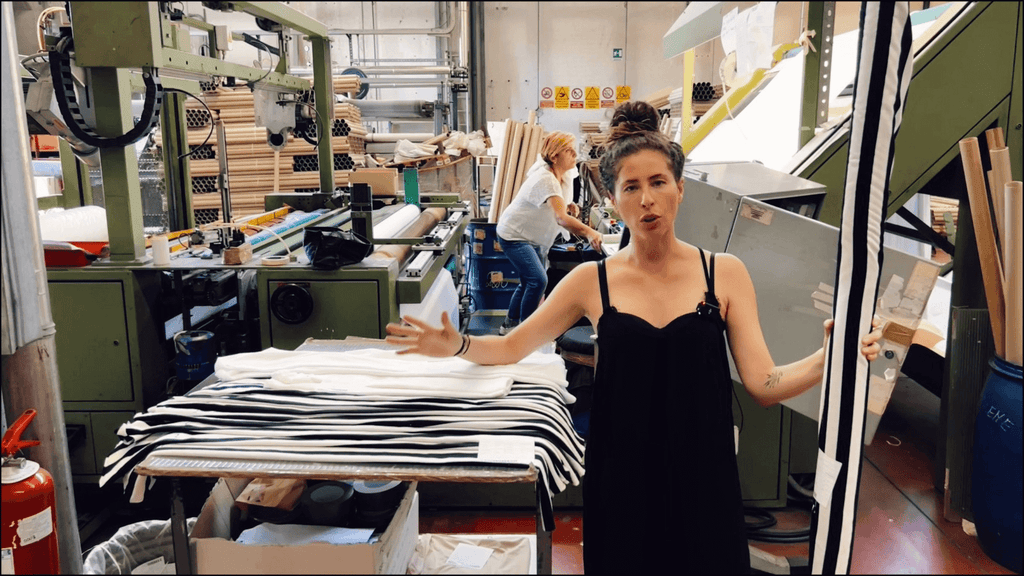
This material is being ready to be checked for coloration variance and shrinkage
If you recognize me, you are conscious (and if we’re simply assembly – take into account this) that my favourite room in any provide chain is the standard assurance room, as a result of that is the issue that may make or break a cloth dye manufacturing unit. The reality is, one thing is at all times bound to go wrong. Even with one of the best gear on the planet, manufacturing won’t ever be excellent. The nice factories are those that catch these errors and repair them earlier than the product will get to a buyer.
For high quality assurance, the dye home ought to take a 20cm pattern from every roll in an order to test for 2 issues: coloration and shrinkage.
COLOR
The very first thing a dye home will do is line up all the cuttings and create one thing known as a shade blanket. By putting all of the cuttings subsequent to one another, it’s simple to verify that all the colours from all the rolls match. The important thing time period to know right here is shade variance.
Now, rolls 1 and a pair of would possibly look fairly related, but when every roll has even a teeny-tiny distinction, by the point you get to roll 20, it would differ vastly. And you probably have a shirt that has a sleeve from roll 1 and a physique from roll 20, it’ll seem like the colours don’t match in any respect. If manufacturers know the shade variance, they’ll work with their manufacturing unit strategically to make use of rolls which can be essentially the most just like each other, to make sure all elements of all clothes match.
SHRINKAGE
At this level, the material has been unrolled, stretched in all instructions, after which folded up. As a result of a lot has occurred to the material, the shrinkage might have been affected. And that could be a crucial factor for the ultimate high quality of a shirt.
Have you ever ever had a shirt, and after you washed it, it match in a different way? Perhaps one aspect was pulling, or the armholes felt bizarre. It’s not prefer it went within the washer and have become too small; it simply felt sort of off. Effectively, it is doable that totally different components of the shirt shrank at various charges. To ensure a high quality product that continues to be excellent after the client washes it, the dye home ought to at all times test each roll for shrinkage.
ENVIRONMENTAL ISSUES TO CONSIDER AT A FABRIC DYE FACTORY
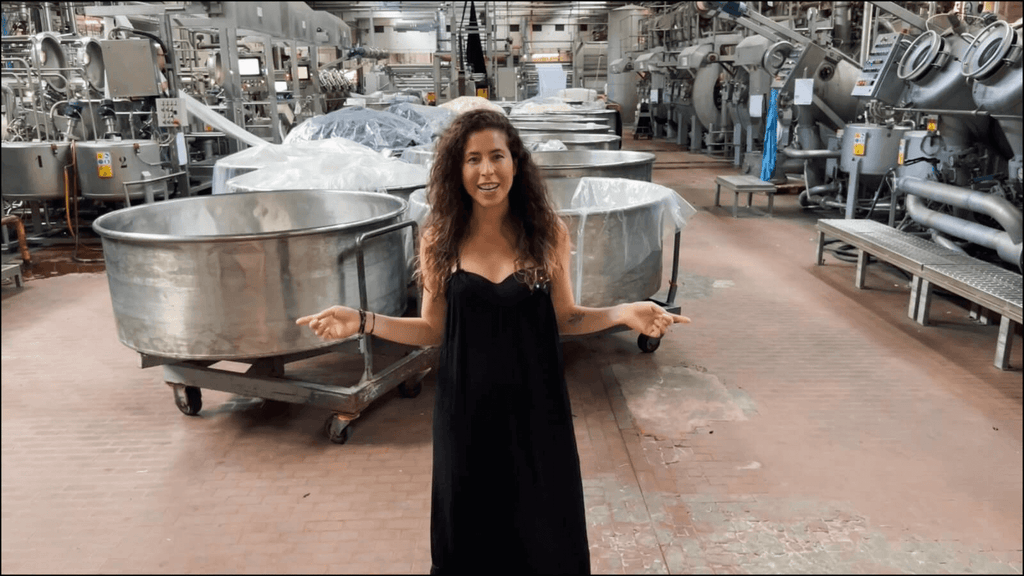
Quite a lot of assets go into preserving dye homes this huge working
What did I say on the very begin of this text? Dyeing requires loads of warmth and water. So, right here is how utilizing these parts impacts the surroundings:
WATER USE
At present, most factories use and reuse their water. As soon as the water is used for dyeing, it undergoes remedy to take away the dyes, making it appropriate for reuse. Now, I’m not saying that some dye homes don’t pollute and dump their soiled dye water into rivers and different locations. However, as a result of water shouldn’t be at all times plentiful in all areas, loads of factories work exhausting to preserve it.
ENERGY USE
An even bigger concern in a cloth dye manufacturing unit is the power to run the machines. Effectively, I assume that is a matter for all the vogue trade.
That can also be why many provider costs are rising. When the value of oil goes up, it immediately impacts the value of textiles, and due to that, clothes as nicely.
Many factories are starting the method of transitioning to greener power sources, similar to solar energy. However, the conversion prices are substantial, and the house required to gather sufficient power to function the machines exceeds what will be accommodated by only a rooftop.
TYPES OF DYE
Typically artificial dyes and chemcial dyes are used with the large machines. Natual dye materials are made in smaller batches, utilizing smaller machines.
60 SECOND RECAP
ADDITIONAL RESOURCES
WHAT DO YOU THINK?
Let me know within the feedback your favourite takeaway from this text and even your least favourite. The suggestions I obtain helps me create extra content material tailor-made to your style, so please contribute your ideas!
latest video

latest pick



news via inbox
Nulla turp dis cursus. Integer liberos euismod pretium faucibua



